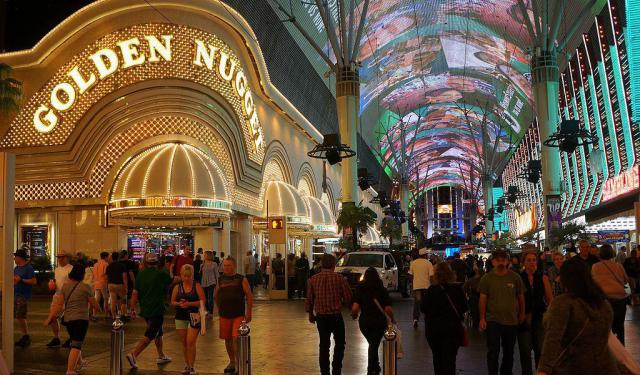


Downtown Walking Tour (Self Guided), Las Vegas
Las Vegas began not as a gambling capital, but as a modest desert settlement shaped by transportation and opportunity. The turning point came in 1905 with the arrival of the San Pedro, Los Angeles and Salt Lake Railroad, which transformed a remote oasis into a service town for workers, traders, and travelers crossing the Mojave Desert. Officially incorporated in 1911, the city’s early life revolved around Fremont Street, which quickly emerged as its commercial and social center.
The legalization of gambling and quick divorces in Nevada in 1931 accelerated this development, drawing dam workers, tourists, and entrepreneurs to downtown Las Vegas. Casinos, hotels, and entertainment venues clustered along Fremont Street, establishing the city’s first gaming district decades before the rise of the Las Vegas Strip and laying the foundations for its modern identity.
During the 1940s and 1950s, downtown flourished. Neon signage transformed Fremont Street into a glowing corridor known as “Glitter Gulch”, while mob-connected investors financed major casino projects. The area also became a focal point for federal attention, including hearings by the Kefauver Committee, held in the downtown courthouse, which exposed organized crime’s role in the gaming industry. Despite this scrutiny, downtown remained the heart of Las Vegas entertainment.
The 1960s and 1970s brought change. Large-scale resort development shifted south to what became the Las Vegas Strip, drawing attention and investment away from downtown. Many historic properties struggled, and some landmarks were demolished. By the 1990s, downtown faced declining foot traffic and aging infrastructure.
Revitalization began in earnest in the mid-1990s with the creation of the Fremont Street Experience, which introduced a pedestrian mall and massive light canopy. In the 2000s and 2010s, renewed interest in history, culture, and urban living fueled further renewal. Museums, restored casinos, public art, and entertainment venues helped reposition downtown as both a heritage district and a contemporary cultural hub.
The Fremont Street Experience anchors the area with its vast light canopy and live entertainment, while the SlotZilla Zipline adds a overhead perspective. Nearby, the Mob Museum explores the city’s criminal and law enforcement past, the Neon Museum preserves iconic signage, and Downtown Container Park offers open-air dining, shops, and public art in a creative setting.
Today, Downtown Las Vegas balances preservation and reinvention. It remains the city’s oldest neighborhood, where early casinos, historic buildings, and neon signs coexist with modern attractions, offering visitors a concentrated view of how Las Vegas evolved from railroad town to global entertainment capital.
The legalization of gambling and quick divorces in Nevada in 1931 accelerated this development, drawing dam workers, tourists, and entrepreneurs to downtown Las Vegas. Casinos, hotels, and entertainment venues clustered along Fremont Street, establishing the city’s first gaming district decades before the rise of the Las Vegas Strip and laying the foundations for its modern identity.
During the 1940s and 1950s, downtown flourished. Neon signage transformed Fremont Street into a glowing corridor known as “Glitter Gulch”, while mob-connected investors financed major casino projects. The area also became a focal point for federal attention, including hearings by the Kefauver Committee, held in the downtown courthouse, which exposed organized crime’s role in the gaming industry. Despite this scrutiny, downtown remained the heart of Las Vegas entertainment.
The 1960s and 1970s brought change. Large-scale resort development shifted south to what became the Las Vegas Strip, drawing attention and investment away from downtown. Many historic properties struggled, and some landmarks were demolished. By the 1990s, downtown faced declining foot traffic and aging infrastructure.
Revitalization began in earnest in the mid-1990s with the creation of the Fremont Street Experience, which introduced a pedestrian mall and massive light canopy. In the 2000s and 2010s, renewed interest in history, culture, and urban living fueled further renewal. Museums, restored casinos, public art, and entertainment venues helped reposition downtown as both a heritage district and a contemporary cultural hub.
The Fremont Street Experience anchors the area with its vast light canopy and live entertainment, while the SlotZilla Zipline adds a overhead perspective. Nearby, the Mob Museum explores the city’s criminal and law enforcement past, the Neon Museum preserves iconic signage, and Downtown Container Park offers open-air dining, shops, and public art in a creative setting.
Today, Downtown Las Vegas balances preservation and reinvention. It remains the city’s oldest neighborhood, where early casinos, historic buildings, and neon signs coexist with modern attractions, offering visitors a concentrated view of how Las Vegas evolved from railroad town to global entertainment capital.
How it works: Download the app "GPSmyCity: Walks in 1K+ Cities" from Apple App Store or Google Play Store to your mobile phone or tablet. The app turns your mobile device into a personal tour guide and its built-in GPS navigation functions guide you from one tour stop to next. The app works offline, so no data plan is needed when traveling abroad.
Download The GPSmyCity App


Downtown Walking Tour Map
Guide Name: Downtown Walking Tour
Guide Location: USA » Las Vegas (See other walking tours in Las Vegas)
Guide Type: Self-guided Walking Tour (Sightseeing)
# of Attractions: 6
Tour Duration: 1 Hour(s)
Travel Distance: 2.1 Km or 1.3 Miles
Author: alice
Sight(s) Featured in This Guide:
Guide Location: USA » Las Vegas (See other walking tours in Las Vegas)
Guide Type: Self-guided Walking Tour (Sightseeing)
# of Attractions: 6
Tour Duration: 1 Hour(s)
Travel Distance: 2.1 Km or 1.3 Miles
Author: alice
Sight(s) Featured in This Guide:
- Neon Museum
- Mob Museum
- Fremont Street Experience
- SlotZilla Zipline
- El Cortez Hotel and Casino
- Downtown Container Park

1) Neon Museum
Las Vegas is widely associated with neon signage, which once defined the city’s streetscape and visual identity. For much of the 20th century, glowing signs advertised casinos, hotels, restaurants, and small businesses, turning the city into a night-time spectacle. Although most of these signs have since been replaced by LED screens and digital displays, a large part of this earlier visual culture has been preserved at the Neon Museum.
The Neon Museum is a dedicated institution focused on collecting and conserving historic neon signs from Las Vegas. Its main exhibition area is the Neon Boneyard, a two-acre outdoor space where more than 150 original signs are displayed. These pieces date mainly from the 1930s through the 1980s and represent different eras of the city’s development. Most of the signs remain permanently at the museum, where they are presented as historical objects rather than active advertisements, though some are selectively illuminated during evening visits or special programs.
A small number of restored historic signs can also be seen outside the museum, installed as public displays in downtown Las Vegas. Several of these are located in and around the Fremont Street Experience, a pedestrian entertainment district known for its overhead LED canopy, live music stages, and concentration of early casinos. These installations are separate from the museum and serve as individual landmarks rather than part of a formal exhibition.
Among the best-known examples are the Hacienda Horse and Rider from the Hacienda Hotel, first installed in 1967; the Aladdin’s Lamp from the Aladdin Hotel, dating to 1966; the Flame Restaurant sign from 1961; the Nevada Hotel sign from 1950; and Dot’s Flowers, originally created for a florist shop in 1949. Together, these signs offer a glimpse into the design styles and commercial language of mid-century Las Vegas.
The Neon Museum is a dedicated institution focused on collecting and conserving historic neon signs from Las Vegas. Its main exhibition area is the Neon Boneyard, a two-acre outdoor space where more than 150 original signs are displayed. These pieces date mainly from the 1930s through the 1980s and represent different eras of the city’s development. Most of the signs remain permanently at the museum, where they are presented as historical objects rather than active advertisements, though some are selectively illuminated during evening visits or special programs.
A small number of restored historic signs can also be seen outside the museum, installed as public displays in downtown Las Vegas. Several of these are located in and around the Fremont Street Experience, a pedestrian entertainment district known for its overhead LED canopy, live music stages, and concentration of early casinos. These installations are separate from the museum and serve as individual landmarks rather than part of a formal exhibition.
Among the best-known examples are the Hacienda Horse and Rider from the Hacienda Hotel, first installed in 1967; the Aladdin’s Lamp from the Aladdin Hotel, dating to 1966; the Flame Restaurant sign from 1961; the Nevada Hotel sign from 1950; and Dot’s Flowers, originally created for a florist shop in 1949. Together, these signs offer a glimpse into the design styles and commercial language of mid-century Las Vegas.

2) Mob Museum (must see)
The National Museum of Organized Crime and Law Enforcement, popularly known as the Mob Museum, is a dedicated institution that showcases the artifacts, narratives, and historical significance of organized crime in the United States. It also highlights the efforts and strategies employed by law enforcement to combat such criminal activities. Opened on February 14, 2012, the museum is housed in the former Las Vegas Post Office and Courthouse, a building constructed in 1933 and listed on the National Register of Historic Places.
The choice of location is significant. The building once served as a functioning federal courthouse and hosted high-profile hearings, including sessions of the Kefauver Committee, which investigated organized crime across the United States. The restored courtroom on the upper floor preserves this history and places visitors in the same space where testimony helped expose the national reach of criminal syndicates. Elsewhere in the museum, original artifacts such as wiretapping equipment, surveillance tools, and pieces of physical evidence illustrate both criminal operations and investigative techniques.
In April 2018, the Mob Museum unveiled a notable addition known as the Underground Exhibit. Located in the basement, this fully operational speakeasy and distillery pays homage to the Prohibition era through its Art Deco design and an array of authentic artifacts from the 1920s. It commemorates the bootleggers, rumrunners, and moonshiners who supplied Americans with alcohol during the thirteen-year federal Prohibition period.
Among the Underground’s standout features is a specially crafted still used to produce in-house 100-proof, 100% corn moonshine, recognized for both its authenticity and safety. Originally available only on-site, the Mob Museum’s moonshine became available for purchase in 2019 through select Lee’s Discount Liquor stores across the Las Vegas Valley. The basement setting provides a fitting atmosphere for a speakeasy-style experience. Once inside, guests can enjoy classic cocktails and moonshine while taking in the ambiance of live jazz music.
The choice of location is significant. The building once served as a functioning federal courthouse and hosted high-profile hearings, including sessions of the Kefauver Committee, which investigated organized crime across the United States. The restored courtroom on the upper floor preserves this history and places visitors in the same space where testimony helped expose the national reach of criminal syndicates. Elsewhere in the museum, original artifacts such as wiretapping equipment, surveillance tools, and pieces of physical evidence illustrate both criminal operations and investigative techniques.
In April 2018, the Mob Museum unveiled a notable addition known as the Underground Exhibit. Located in the basement, this fully operational speakeasy and distillery pays homage to the Prohibition era through its Art Deco design and an array of authentic artifacts from the 1920s. It commemorates the bootleggers, rumrunners, and moonshiners who supplied Americans with alcohol during the thirteen-year federal Prohibition period.
Among the Underground’s standout features is a specially crafted still used to produce in-house 100-proof, 100% corn moonshine, recognized for both its authenticity and safety. Originally available only on-site, the Mob Museum’s moonshine became available for purchase in 2019 through select Lee’s Discount Liquor stores across the Las Vegas Valley. The basement setting provides a fitting atmosphere for a speakeasy-style experience. Once inside, guests can enjoy classic cocktails and moonshine while taking in the ambiance of live jazz music.

3) Fremont Street Experience (must see)
The Fremont Street Experience unfolds along the westernmost five blocks of Fremont Street, forming a pedestrian corridor that traces the city’s earliest commercial and gaming history beneath a vast light canopy. This stretch, long known as “Glitter Gulch,” is where many of Las Vegas’ first milestones took place and where visitors can still walk past their original locations within a compact area.
At the western end of the Fremont Street Experience, near the intersection with Main Street, stands the Golden Gate Hotel & Casino. Opened in 1906 as the Hotel Nevada, it was the city’s first hotel. Facing Fremont Street, the Golden Gate sits directly to your right if you are standing on Fremont and looking east, marking the traditional gateway into Glitter Gulch.
From here, walk east along Fremont Street for about 200 feet. On the north side of the street, to your left, once stood the Northern Club, located at 15 East Fremont Street. Although the Northern Club is no longer there, this site is historically important as the place where Nevada’s first gaming license was issued, formalizing casino gambling in the state. Continuing east for another approximately 820 feet, you reach the area near Las Vegas Boulevard, where the Fremont Hotel stays. Completed in 1956, it is Las Vegas’ first high-rise hotel. Its location lies to your left, just before Fremont Street crosses Las Vegas Boulevard.
As you proceed east, you move fully beneath the Fremont Street Experience’s defining feature: the barrel-vault canopy. Rising 90 feet overhead and extending approximately 1,375 feet from Main Street to Fourth Street, the canopy covers the central portion of the pedestrian mall. Before each Viva Vision light-and-sound show, surrounding building facades dim briefly, focusing attention upward as the canopy comes alive with synchronized visuals and music.
Continue walking east under the canopy toward Fourth Street, and you will see the SlotZilla Zip Line launch tower ahead. Located near the intersection of Fremont Street and Fourth Street, the slot-machine-shaped tower rises above the pedestrian mall. From here, riders launch either in a seated position or in a horizontal “Superman” style, flying westward above Fremont Street, directly beneath the canopy, with a full aerial view of the entertainment district below.
At the western end of the Fremont Street Experience, near the intersection with Main Street, stands the Golden Gate Hotel & Casino. Opened in 1906 as the Hotel Nevada, it was the city’s first hotel. Facing Fremont Street, the Golden Gate sits directly to your right if you are standing on Fremont and looking east, marking the traditional gateway into Glitter Gulch.
From here, walk east along Fremont Street for about 200 feet. On the north side of the street, to your left, once stood the Northern Club, located at 15 East Fremont Street. Although the Northern Club is no longer there, this site is historically important as the place where Nevada’s first gaming license was issued, formalizing casino gambling in the state. Continuing east for another approximately 820 feet, you reach the area near Las Vegas Boulevard, where the Fremont Hotel stays. Completed in 1956, it is Las Vegas’ first high-rise hotel. Its location lies to your left, just before Fremont Street crosses Las Vegas Boulevard.
As you proceed east, you move fully beneath the Fremont Street Experience’s defining feature: the barrel-vault canopy. Rising 90 feet overhead and extending approximately 1,375 feet from Main Street to Fourth Street, the canopy covers the central portion of the pedestrian mall. Before each Viva Vision light-and-sound show, surrounding building facades dim briefly, focusing attention upward as the canopy comes alive with synchronized visuals and music.
Continue walking east under the canopy toward Fourth Street, and you will see the SlotZilla Zip Line launch tower ahead. Located near the intersection of Fremont Street and Fourth Street, the slot-machine-shaped tower rises above the pedestrian mall. From here, riders launch either in a seated position or in a horizontal “Superman” style, flying westward above Fremont Street, directly beneath the canopy, with a full aerial view of the entertainment district below.

4) SlotZilla Zipline
Housed in an 11-story structure resembling a giant slot machine, the SlotZilla Zip Line is hard to miss. It is one of the most distinctive experiences in Las Vegas, sending riders soaring high above the Fremont Street Experience, both day and night, for an elevated view of the downtown entertainment district.
There are two zip lines in operation. The lower line carries riders in a seated harness, launching from 77 feet above ground and covering 850 feet, roughly half the length of the Fremont Street Experience. The upper line features a horizontal “Superman” flying position, launching from 114 feet and stretching 1,700 feet, the full length of the Fremont Street Experience. The lower ride lasts about 30 seconds, while the upper ride takes roughly one minute to complete.
The $12-million structure, which took 14 months to build, is decorated with oversized dice, a martini glass, a pink flamingo, coins, video reels, a giant arm, and two 35-foot-tall showgirls. The showgirl figures are replicas inspired by two real individuals, Jennifer and Porsha, who were known for frequently accompanying former Las Vegas mayor Oscar Goodman—a famously colorful local figure—at public events.
SlotZilla opened in 2014, and by August 2019, five years into operation, it had carried more than two million riders. Later that year, the Viva Vision canopy, the world’s largest single video screen spanning the Fremont Street Experience, underwent a $32-million renovation to support advanced 3D graphic technology.
The most dramatic time to experience SlotZilla is after dusk, when the Fremont Street Experience is at its busiest and the Viva Vision light shows create a more intense and visually immersive backdrop.
There are two zip lines in operation. The lower line carries riders in a seated harness, launching from 77 feet above ground and covering 850 feet, roughly half the length of the Fremont Street Experience. The upper line features a horizontal “Superman” flying position, launching from 114 feet and stretching 1,700 feet, the full length of the Fremont Street Experience. The lower ride lasts about 30 seconds, while the upper ride takes roughly one minute to complete.
The $12-million structure, which took 14 months to build, is decorated with oversized dice, a martini glass, a pink flamingo, coins, video reels, a giant arm, and two 35-foot-tall showgirls. The showgirl figures are replicas inspired by two real individuals, Jennifer and Porsha, who were known for frequently accompanying former Las Vegas mayor Oscar Goodman—a famously colorful local figure—at public events.
SlotZilla opened in 2014, and by August 2019, five years into operation, it had carried more than two million riders. Later that year, the Viva Vision canopy, the world’s largest single video screen spanning the Fremont Street Experience, underwent a $32-million renovation to support advanced 3D graphic technology.
The most dramatic time to experience SlotZilla is after dusk, when the Fremont Street Experience is at its busiest and the Viva Vision light shows create a more intense and visually immersive backdrop.

5) El Cortez Hotel and Casino
El Cortez is a casino-hotel property in continuous operation since November 7, 1941, making it one of the city’s oldest still-active casino resorts. Despite being initially considered slightly removed from the core of downtown activity, the property achieved early success, attracting the attention of prominent organized crime figures. In 1945, it was acquired for $600,000 by Bugsy Siegel, Meyer Lansky, Gus Greenbaum, and Moe Sedway. For Siegel in particular, El Cortez served as a proving ground, providing him with practical experience in casino management before his later involvement in more ambitious projects on the Strip.
Over the decades, El Cortez has remained operational while gradually adapting to changing tastes. The original structure reflects Spanish Colonial Revival architecture, a style popular in the Southwest during the early 20th century, though the facade was modernized in 1952 to reflect mid-century design trends. Later renovation and revitalization efforts introduced additional hotel towers, while preserving much of the property’s historic footprint. A prominent neon sign was also added, embracing an art form that had fallen out of favor for years before experiencing a renewed appreciation among classic Las Vegas properties.
Unlike many modern resorts, El Cortez has retained a reputation for a more traditional gaming atmosphere, featuring lower table limits and a layout that reflects earlier casino design principles. The property has also undergone careful restoration work in recent years to balance modern amenities with its historic character, rather than pursuing large-scale reinvention.
In recognition of its architectural and cultural importance, El Cortez was officially listed on the National Register of Historic Places on February 22, 2013, cementing its status as a rare surviving link to Las Vegas’s pre-Strip casino era.
Over the decades, El Cortez has remained operational while gradually adapting to changing tastes. The original structure reflects Spanish Colonial Revival architecture, a style popular in the Southwest during the early 20th century, though the facade was modernized in 1952 to reflect mid-century design trends. Later renovation and revitalization efforts introduced additional hotel towers, while preserving much of the property’s historic footprint. A prominent neon sign was also added, embracing an art form that had fallen out of favor for years before experiencing a renewed appreciation among classic Las Vegas properties.
Unlike many modern resorts, El Cortez has retained a reputation for a more traditional gaming atmosphere, featuring lower table limits and a layout that reflects earlier casino design principles. The property has also undergone careful restoration work in recent years to balance modern amenities with its historic character, rather than pursuing large-scale reinvention.
In recognition of its architectural and cultural importance, El Cortez was officially listed on the National Register of Historic Places on February 22, 2013, cementing its status as a rare surviving link to Las Vegas’s pre-Strip casino era.

6) Downtown Container Park
Downtown Container Park is an open-air shopping and entertainment venue constructed from 43 repurposed shipping containers and 41 locally manufactured Xtreme Cubes. Opened in 2013 as part of the revitalization of downtown Las Vegas, the park was developed by entrepreneur Tony Hsieh as a community-focused alternative to traditional retail spaces.
The venue hosts around 38 independently owned boutique shops, along with a mix of casual eateries, bars, and cafes. A central open space includes a stage that regularly features live music, performances, film screenings, and public events, creating a lively social atmosphere throughout the day and evening. Shaded seating areas and open walkways make it an inviting stop for visitors exploring the Fremont East district.
At the park’s entrance stands a 40-foot-tall praying mantis sculpture by artist Kirk Jellum, which periodically shoots flames from its antennae. The sculpture has become a well-known symbol of downtown Las Vegas’ creative renewal.
Families are drawn to the interactive playground, anchored by The Treehouse, a multi-level play structure with a 33-foot-tall slide, NEOS play systems, oversized foam building blocks, and other hands-on features. After entering through the main gate beneath the praying mantis sculpture, walk straight ahead into the park’s central plaza. From there, continue forward past the stage, keeping it slightly to your left. The playground area appears ahead and slightly to the right, set back from the main walkway. The Treehouse is easy to spot thanks to its height and bright play elements.
Dining options range from casual bites to specialty offerings. From the courtyard, turn left and head up the stairs to the second floor to reach Downtown Terrace, a full-service, sit-down restaurant and bar located on the second floor. For snacks and specialty items, you’ll find JoJo’s Jerky on the ground floor, known for its award-winning beef jerky and packaged treats that are easy to take along.
Downtown Container Park works well for both daytime visits and evening gatherings. Bars typically remain open later than the surrounding shops, making the venue popular for group meetups and nightcaps. After 9:00 pm, the park operates as a 21+ venue, and valid identification is required for entry at the gate.
The venue hosts around 38 independently owned boutique shops, along with a mix of casual eateries, bars, and cafes. A central open space includes a stage that regularly features live music, performances, film screenings, and public events, creating a lively social atmosphere throughout the day and evening. Shaded seating areas and open walkways make it an inviting stop for visitors exploring the Fremont East district.
At the park’s entrance stands a 40-foot-tall praying mantis sculpture by artist Kirk Jellum, which periodically shoots flames from its antennae. The sculpture has become a well-known symbol of downtown Las Vegas’ creative renewal.
Families are drawn to the interactive playground, anchored by The Treehouse, a multi-level play structure with a 33-foot-tall slide, NEOS play systems, oversized foam building blocks, and other hands-on features. After entering through the main gate beneath the praying mantis sculpture, walk straight ahead into the park’s central plaza. From there, continue forward past the stage, keeping it slightly to your left. The playground area appears ahead and slightly to the right, set back from the main walkway. The Treehouse is easy to spot thanks to its height and bright play elements.
Dining options range from casual bites to specialty offerings. From the courtyard, turn left and head up the stairs to the second floor to reach Downtown Terrace, a full-service, sit-down restaurant and bar located on the second floor. For snacks and specialty items, you’ll find JoJo’s Jerky on the ground floor, known for its award-winning beef jerky and packaged treats that are easy to take along.
Downtown Container Park works well for both daytime visits and evening gatherings. Bars typically remain open later than the surrounding shops, making the venue popular for group meetups and nightcaps. After 9:00 pm, the park operates as a 21+ venue, and valid identification is required for entry at the gate.
Walking Tours in Las Vegas, Nevada

Create Your Own Walk in Las Vegas
Creating your own self-guided walk in Las Vegas is easy and fun. Choose the city attractions that you want to see and a walk route map will be created just for you. You can even set your hotel as the start point of the walk.
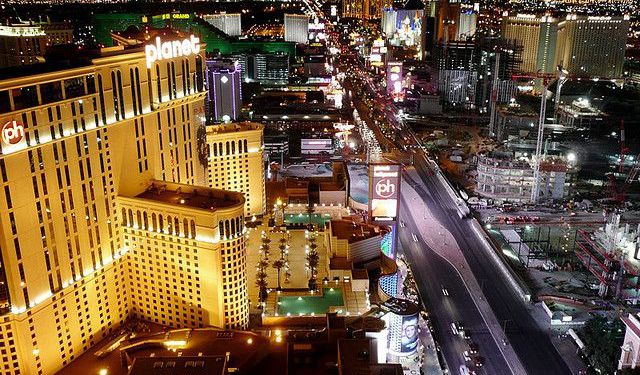
Las Vegas Boulevard Walking Tour
“What happens in Las Vegas, stays in Las Vegas.”
Las Vegas began as a desert oasis long before it became synonymous with neon lights and casinos. The area was originally inhabited by Southern Paiute peoples, who relied on natural artesian springs that surfaced in what is now the Las Vegas Valley. The name Las Vegas comes from Spanish and means “the meadows”. It was given in 1829 by... view more
Tour Duration: 2 Hour(s)
Travel Distance: 3.4 Km or 2.1 Miles
Las Vegas began as a desert oasis long before it became synonymous with neon lights and casinos. The area was originally inhabited by Southern Paiute peoples, who relied on natural artesian springs that surfaced in what is now the Las Vegas Valley. The name Las Vegas comes from Spanish and means “the meadows”. It was given in 1829 by... view more
Tour Duration: 2 Hour(s)
Travel Distance: 3.4 Km or 2.1 Miles

Gangster Attractions Walking Tour
The development of Las Vegas as a gambling and entertainment hub in the mid-20th century drew the attention of powerful criminal syndicates, who saw the potential for profit in the city's casinos and other enterprises. Indeed, Las Vegas with its glitz and glamour wouldn't be what it is now without the involvement of mobster “wiseguys”. There are still a few places in town that evoke... view more
Tour Duration: 4 Hour(s)
Travel Distance: 10.2 Km or 6.3 Miles
Tour Duration: 4 Hour(s)
Travel Distance: 10.2 Km or 6.3 Miles
Useful Travel Guides for Planning Your Trip
Top 18 Buffets in Las Vegas
In 1941, Thomas Hull, the man behind the Strip’s first hotel the El Rancho Vegas, realized that even though he might lose a few dollars by offering an “all you can eat” buffet,” the reward of funneling thousands of hungry gamblers through his casino to get to the buffet would more than pay...
13 Best Food Destinations in Las Vegas
Las Vegas has a long-standing history of great restaurants. The city has grown so fast in the last decades, seeing many celebrity chefs in the world of culinary setting up multiple craft food establishments in either mega-resort hotels or private entities off-the-Strip, that now it is practically...

20 Souvenirs to Bring Home from Las Vegas
You may have kept on the run, had some fun in Las Vegas and, unless it cost you the very last dime, you might want to pick up something memorable to bring home, other than a handful of uncashed casino chips. In fact, you might as well be surprised to know there is something else in Vegas, apart from...
The Most Popular Cities
/ view all