


Jade Market, Hong Kong
The Jade Market is an indoor marketplace known for its wide selection of jade, pearls, gemstones, and other semi-precious items. Popular with both tourists and locals, it offers a traditional street-market atmosphere while providing the convenience of an enclosed setting. Shoppers visit for everything from inexpensive souvenirs to higher-end jade pieces, making it one of Kowloon’s most distinctive markets.
The market contains more than 400 stalls, each offering items that suit a range of budgets. Prices are flexible, and bargaining is expected. Vendors may begin with high starting prices, but buyers can usually negotiate to about half the asking price—or even lower—depending on the item and the stallholder. This approach is part of the experience and often leads to a lively, friendly exchange.
Understanding jade quality can help visitors make more informed purchases. Top-grade jade is a vivid, pure green and can be extremely expensive. Many pieces have yellow or lighter green tones, but well-finished items should not show brown or gray patches. The most valuable jade is semi-transparent, while opaque stones with cloudy areas tend to be of lower quality. In Chinese culture, jade is associated with beauty, purity, and protection. It is traditionally believed to promote good health and longevity, and many people wear jade amulets as protective charms.
The market contains more than 400 stalls, each offering items that suit a range of budgets. Prices are flexible, and bargaining is expected. Vendors may begin with high starting prices, but buyers can usually negotiate to about half the asking price—or even lower—depending on the item and the stallholder. This approach is part of the experience and often leads to a lively, friendly exchange.
Understanding jade quality can help visitors make more informed purchases. Top-grade jade is a vivid, pure green and can be extremely expensive. Many pieces have yellow or lighter green tones, but well-finished items should not show brown or gray patches. The most valuable jade is semi-transparent, while opaque stones with cloudy areas tend to be of lower quality. In Chinese culture, jade is associated with beauty, purity, and protection. It is traditionally believed to promote good health and longevity, and many people wear jade amulets as protective charms.
Want to visit this sight? Check out these Self-Guided Walking Tours in Hong Kong. Alternatively, you can download the mobile app "GPSmyCity: Walks in 1K+ Cities" from Apple App Store or Google Play Store. The app turns your mobile device to a personal tour guide and it works offline, so no data plan is needed when traveling abroad.
Download The GPSmyCity App


Jade Market on Map
Sight Name: Jade Market
Sight Location: Hong Kong, Hong Kong (See walking tours in Hong Kong)
Sight Type: Shopping
Guide(s) Containing This Sight:
Sight Location: Hong Kong, Hong Kong (See walking tours in Hong Kong)
Sight Type: Shopping
Guide(s) Containing This Sight:
Walking Tours in Hong Kong, Hong Kong

Create Your Own Walk in Hong Kong
Creating your own self-guided walk in Hong Kong is easy and fun. Choose the city attractions that you want to see and a walk route map will be created just for you. You can even set your hotel as the start point of the walk.

Colonial Buildings in Central Hong Kong
Hong Kong’s Central district is one of the rare places in Asia where traces of a colonial past stand visibly beside glass towers and global financial institutions. Moving through these streets reveals a network of buildings that once shaped governance, religion, trade, and everyday life during more than 150 years of British administration. Together, they chart Hong Kong’s evolution from a... view more
Tour Duration: 2 Hour(s)
Travel Distance: 2.5 Km or 1.6 Miles
Tour Duration: 2 Hour(s)
Travel Distance: 2.5 Km or 1.6 Miles

Downtown Introduction Walking Tour
Hong Kong is a city defined by contrasts—towering glass skylines rising beside quiet temples and centuries of culture. Even its name, from the Cantonese Heung Gong, meaning “Fragrant Harbor”, hints at its early role as a trading point for incense woods and aromatic goods moving through the Pearl River Delta. What began as the name of a small village near the present-day Aberdeen area... view more
Tour Duration: 2 Hour(s)
Travel Distance: 3.7 Km or 2.3 Miles
Tour Duration: 2 Hour(s)
Travel Distance: 3.7 Km or 2.3 Miles

Causeway Bay Walking Tour
If you're looking for a taste of Hong Kong's energetic urban life, Causeway Bay is the place to be. Well known for its mega shopping malls and skyscrapers “rubbing shoulders” with rustic streets and picturesque corners, this bustling district is one of the city's most popular shopping and entertainment hubs.
The foremost among its landmarks is Times Square. Despite the name,... view more
Tour Duration: 1 Hour(s)
Travel Distance: 2.8 Km or 1.7 Miles
The foremost among its landmarks is Times Square. Despite the name,... view more
Tour Duration: 1 Hour(s)
Travel Distance: 2.8 Km or 1.7 Miles

Kowloon Walking Tour
Kowloon is the urban peninsula directly north of Victoria Harbor, forming one of Hong Kong’s most densely populated and historically significant districts. The name Kowloon translates to “Nine Dragons”. According to legend, the Song-dynasty Emperor Bing once observed eight surrounding hills and proclaimed them dragons; an attendant reminded him that the emperor himself counted as a dragon,... view more
Tour Duration: 2 Hour(s)
Travel Distance: 4.6 Km or 2.9 Miles
Tour Duration: 2 Hour(s)
Travel Distance: 4.6 Km or 2.9 Miles
Useful Travel Guides for Planning Your Trip
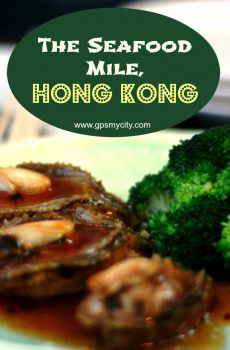
The Seafood Mile, Hong Kong
Cheung Chau is one of a cluster of Islands off the coast of Hong Kong. It has a fishing harbor to the front, which is lit up at night with tiny green, blue and white boat lights. The harbor is overlooked by many restaurants and street food can be bought from many vendors, who line up throwing an...

15 Hong Kong Products A Traveller Shouldn't Miss
The image of Hong Kong has been much popular with tourists since the late 1960s-early 70s, in large part due to the Bruce Lee movies, and has remained so after the city was ceded back to China in 1997. Still, despite such popularity, there're quite a few things, originally made in Hong Kong,...