
Parrocchia Sant'Agostino (Parish of Saint Augustine), Civitavecchia
Since 1995, a phenomenal event of a, we might say, paranormal nature has occurred; a miraculous event which left national public opinion literally stunned and which sparked wide debates in Italian and foreign Catholic circles, even attracting the attention of the Holy Father. On February 2 of the same year, in fact, on the occasion of the Feast of the Presentation of Jesus in the Temple and Purification of Mary, a small statue of the Madonna, depicting the Queen of Peace and coming from Medjugorie, began to cry blood in the garden of a family in parish of S. Agostino, in Civitavecchia. Well, from that date until March 15th the Madonnina cried 14 times in the presence of many people who gave their sworn testimony before the Theological Commission established by the Bishop who held the statuette in his hands during the last tear of blood ; from here he, having overcome all doubts, paved the way for official recognition. During the succession of those events, there were numerous open debates and clashes between those who asserted the authenticity of the miracle and those who, animated by a feeling of skepticism, hypothesized that the event was absolutely the result of human action and not Divine action. The statuette was thus scientifically examined with positive results: there were no tricks or devices hidden inside and the tears were made of human blood. Finally, after many difficulties of various kinds, on 17 June 1995, the Bishop placed the statuette in a shrine located in the Parish of S.Agostino and thus exposed it to the veneration of the faithful. From that day, a considerable pilgrimage began, of even global importance, aimed at the veneration of the one who everyone now calls "The Madonnina of Civitavecchia". The pilgrimages are nocturnal and take place on February 1st and May 31st.
The Madonnina of Civitavecchia is a small statue depicting the Madonna who, near Civitavecchia, from 2 February to 15 March 1995, shed tears of blood fourteen times. Since 17 June 1995 the statuette, kept in a shrine in the local parish of Sant'Agostino, has been exposed to the veneration of the faithful. The Madonnina of Civitavecchia is a 42 cm high plaster statuette, depicting the Queen of Peace, created by the Croatian craftsman Sthepan Vlaho. It was purchased in a shop in Medjugorje on 16 September 1994 by Don Pablo Martìn, parish priest of the church of Sant'Agostino in Civitavecchia; the priest donated it to the Gregori family, belonging to his parish and living in via Pantano, made up of the spouses Fabio and Anna Maria (Accorsi) and their children Jessica and Davide. The statuette had been placed in a niche, built by Fabio in the home garden. On February 2, 1995, at around 4.20pm, Jessica, who was then five years old, claimed to have seen a liquid, which looked like blood, run from the Madonna's eyes down her cheeks. She notified her father and he, after having notified his wife, reported the incident shortly afterwards to Don Pablo, who immediately went to the Gregoris, seeing the phenomenon firsthand. On the evening of February 3rd the event was repeated in front of some witnesses, and continued in the following days, while the number of faithful or simply curious people increased; Journalists and law enforcement arrived, while on February 5 the news was broadcast on national TV news. Meanwhile, the bishop of Civitavecchia-Tarquinia, Monsignor Girolamo Grillo, was informed and appointed a theological commission to study the phenomenon, while the first laboratory analyzes were carried out. The Madonnina was also subjected to a brief exorcism, to exclude the possible demonic nature of the facts. The statuette left the Gregori house due to the siege of the crowd and, after initially passing through the church of Sant'Agostino, was kept by the diocese in a secret place. On February 28, the results of the analyzes were made known: the Madonnina contained no devices, the liquid examined was human blood of the male type. The Vatican was also informed by the bishop, in the person of the then Cardinal Joseph Ratzinger, while on March 15 the last of the fourteen tears occurred while Monsignor Grillo, initially skeptical, held the statuette in his hands, gathered in prayer together with some witnesses. Following a complaint from Codacons for abuse of popular credulity and fraud, the figurine was seized by magistrate Antonio Albano. During this period some technical assessments will be carried out, including a stratigraphic analysis of the blood traces and a detailed photographic comparison of the figurine's face. The alleged 14 tears were witnessed by a total of around 50 people, differing in age and social status. The witnesses interviewed " swore to tell the truth and freely submitted to the interrogation." Since 17 June 1995 the Madonnina has been exposed to the veneration of the faithful in the church of Sant'Agostino in Civitavecchia. ***PH***
The Madonnina of Civitavecchia is a small statue depicting the Madonna who, near Civitavecchia, from 2 February to 15 March 1995, shed tears of blood fourteen times. Since 17 June 1995 the statuette, kept in a shrine in the local parish of Sant'Agostino, has been exposed to the veneration of the faithful. The Madonnina of Civitavecchia is a 42 cm high plaster statuette, depicting the Queen of Peace, created by the Croatian craftsman Sthepan Vlaho. It was purchased in a shop in Medjugorje on 16 September 1994 by Don Pablo Martìn, parish priest of the church of Sant'Agostino in Civitavecchia; the priest donated it to the Gregori family, belonging to his parish and living in via Pantano, made up of the spouses Fabio and Anna Maria (Accorsi) and their children Jessica and Davide. The statuette had been placed in a niche, built by Fabio in the home garden. On February 2, 1995, at around 4.20pm, Jessica, who was then five years old, claimed to have seen a liquid, which looked like blood, run from the Madonna's eyes down her cheeks. She notified her father and he, after having notified his wife, reported the incident shortly afterwards to Don Pablo, who immediately went to the Gregoris, seeing the phenomenon firsthand. On the evening of February 3rd the event was repeated in front of some witnesses, and continued in the following days, while the number of faithful or simply curious people increased; Journalists and law enforcement arrived, while on February 5 the news was broadcast on national TV news. Meanwhile, the bishop of Civitavecchia-Tarquinia, Monsignor Girolamo Grillo, was informed and appointed a theological commission to study the phenomenon, while the first laboratory analyzes were carried out. The Madonnina was also subjected to a brief exorcism, to exclude the possible demonic nature of the facts. The statuette left the Gregori house due to the siege of the crowd and, after initially passing through the church of Sant'Agostino, was kept by the diocese in a secret place. On February 28, the results of the analyzes were made known: the Madonnina contained no devices, the liquid examined was human blood of the male type. The Vatican was also informed by the bishop, in the person of the then Cardinal Joseph Ratzinger, while on March 15 the last of the fourteen tears occurred while Monsignor Grillo, initially skeptical, held the statuette in his hands, gathered in prayer together with some witnesses. Following a complaint from Codacons for abuse of popular credulity and fraud, the figurine was seized by magistrate Antonio Albano. During this period some technical assessments will be carried out, including a stratigraphic analysis of the blood traces and a detailed photographic comparison of the figurine's face. The alleged 14 tears were witnessed by a total of around 50 people, differing in age and social status. The witnesses interviewed " swore to tell the truth and freely submitted to the interrogation." Since 17 June 1995 the Madonnina has been exposed to the veneration of the faithful in the church of Sant'Agostino in Civitavecchia. ***PH***
Parrocchia Sant'Agostino (Parish of Saint Augustine) on Map
Sight Name: Parrocchia Sant'Agostino (Parish of Saint Augustine)
Sight Location: Civitavecchia, Italy (See walking tours in Civitavecchia)
Sight Type: Religious
Sight Location: Civitavecchia, Italy (See walking tours in Civitavecchia)
Sight Type: Religious
Walking Tours in Civitavecchia, Italy

Create Your Own Walk in Civitavecchia
Creating your own self-guided walk in Civitavecchia is easy and fun. Choose the city attractions that you want to see and a walk route map will be created just for you. You can even set your hotel as the start point of the walk.
Civitavecchia Introduction Walking Tour
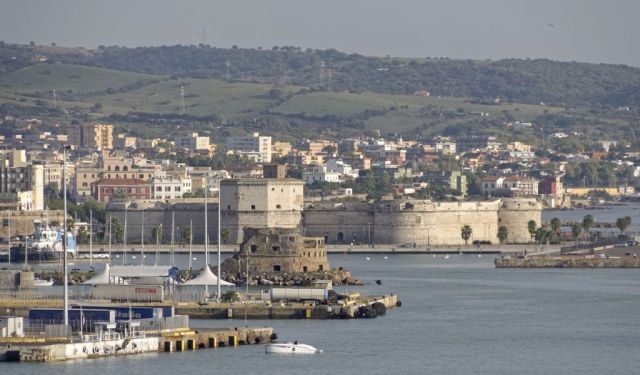
Civitavecchia, meaning "ancient town," is a major port on the Tyrrhenian Sea that historically served as Rome’s maritime gateway. Founded by the Etruscans, it was later developed by Roman Emperor Trajan in the 2nd century and was originally known as Centum Cellae or “Hundred Cells.” The latter name was probably due to the many vaulted "cells" forming the harbor wall, some... view more
Tour Duration: 2 Hour(s)
Travel Distance: 2.2 Km or 1.4 Miles
Tour Duration: 2 Hour(s)
Travel Distance: 2.2 Km or 1.4 Miles