Custom Walk in New York, New York by abbisimmester_8382c created on 2025-07-27
Guide Location: USA » New York
Guide Type: Custom Walk
# of Sights: 7
Tour Duration: 4 Hour(s)
Travel Distance: 10.4 Km or 6.5 Miles
Share Key: T4UQS
Guide Type: Custom Walk
# of Sights: 7
Tour Duration: 4 Hour(s)
Travel Distance: 10.4 Km or 6.5 Miles
Share Key: T4UQS
How It Works
Please retrieve this walk in the GPSmyCity app. Once done, the app will guide you from one tour stop to the next as if you had a personal tour guide. If you created the walk on this website or come to the page via a link, please follow the instructions below to retrieve the walk in the app.
Retrieve This Walk in App
Step 1. Download the app "GPSmyCity: Walks in 1K+ Cities" on Apple App Store or Google Play Store.


Step 2. In the GPSmyCity app, download(or launch) the guide "New York Map and Walking Tours".
Step 3. Tap the menu button located at upper right corner of the "Walks" screen and select "Retrieve custom walk". Enter the share key: T4UQS

1) Brooklyn Bridge (must see)
Seeking the most dramatic entrance into Manhattan?—The Brooklyn Bridge is the one. Stretching across the East River like a steel-wire tightrope for giants, this is one of New York’s most recognizable silhouettes since 1883—equal parts engineering flex and architectural poetry. The country took notice of it rather early, awarding the bridge the National Historic Landmark status in 1964, following which, civil engineers gave it their own stamp of admiration (as a National Historic Civil Engineering Landmark) in 1972.
The idea of linking Brooklyn and Manhattan had been floating around since the early 1800s, but it took the engineering duo—of John Augustus Roebling with the design, and his son Washington with the execution—to actually make it happen. Construction kicked off in 1869, and after fourteen ambitious, chaotic, and occasionally hazardous years, the bridge finally opened on May 24, 1883. President Chester A. Arthur even showed up for the ceremony, thus proving that ribbon-cuttings were the hot ticket long before Instagram...
Architecturally, the bridge is a hybrid marvel: part suspension bridge, part cable-stayed experiment, all held together by an orchestra of vertical and diagonal cables. Its stone towers, crowned with Neo-Gothic arches, rise from the river like a pair of cathedral doorways, guiding a roadway that stays well above passing ships thanks to long, raised viaducts.
The structure's numbers are just as solid. The main span clocks in at nearly 2,000 feet, the bridge itself expands and contracts by up to 16 inches, depending on the weather’s mood swings, and ships can glide under it with 127 feet of clearance to spare. Six trusses run beneath the roadway, while four enormous cables hold everything aloft—convincing evidence that 19th-century engineering was not messing around...
But the bridge saves its finest touch for people on foot. Eighteen feet above the cars is the elevated promenade, a wooden boardwalk divided down the middle, so cyclists and pedestrians can coexist in relative peace. Step onto it, and the city opens around you—skyline ahead, river below, and the gentle hum of New York all around. Indeed, it’s more than just a crossing, but a small, unforgettable performance...
The idea of linking Brooklyn and Manhattan had been floating around since the early 1800s, but it took the engineering duo—of John Augustus Roebling with the design, and his son Washington with the execution—to actually make it happen. Construction kicked off in 1869, and after fourteen ambitious, chaotic, and occasionally hazardous years, the bridge finally opened on May 24, 1883. President Chester A. Arthur even showed up for the ceremony, thus proving that ribbon-cuttings were the hot ticket long before Instagram...
Architecturally, the bridge is a hybrid marvel: part suspension bridge, part cable-stayed experiment, all held together by an orchestra of vertical and diagonal cables. Its stone towers, crowned with Neo-Gothic arches, rise from the river like a pair of cathedral doorways, guiding a roadway that stays well above passing ships thanks to long, raised viaducts.
The structure's numbers are just as solid. The main span clocks in at nearly 2,000 feet, the bridge itself expands and contracts by up to 16 inches, depending on the weather’s mood swings, and ships can glide under it with 127 feet of clearance to spare. Six trusses run beneath the roadway, while four enormous cables hold everything aloft—convincing evidence that 19th-century engineering was not messing around...
But the bridge saves its finest touch for people on foot. Eighteen feet above the cars is the elevated promenade, a wooden boardwalk divided down the middle, so cyclists and pedestrians can coexist in relative peace. Step onto it, and the city opens around you—skyline ahead, river below, and the gentle hum of New York all around. Indeed, it’s more than just a crossing, but a small, unforgettable performance...

2) Wall Street
In the days of New Amsterdam, Wall Street was known in Dutch as "de Waalstraat." The origin of the name varies. It might refer to the Walloon people from the Netherlands who settled around there. Or, the name connects with Peter Minuit, the Governor of the colony, who was a Walloon. Another theory holds that there was a wall or rampart of wood on the northern end of New Amsterdam. It was removed in 1699.
Wall Street covers an eight-block stretch of lower Manhattan. Broadway crosses at the west end and South Street at the East River end. Whether the name was for a wall or a Walloon, Wall Street today stands for the financial markets of the United States. In these short eight blocks is a major financial center of the world.
In the late 1700s, there was a buttonwood tree growing on Wall Street where traders would meet regularly under the buttonwood tree to trade shares. In 1792 they created the Buttonwood Agreement, forming the association that became known as the New York Stock Exchange.
The Brutalist and Bauhaus Post-Modern Craze architectural styles largely bypassed the Wall Street area. The buildings here are more venerable, products of the Gilded Age architecture. Facades, even on the tallest buildings, are more elaborate.
Wall Street landmarks include The Federal Hall National Memorial; 55 Wall Street, the former National City Bank Building; the former Customs House; 14 Wall Street, a 32-story Skyscraper with a stepped pyramid; the New York Stock Exchange Building on Broad Street; the Irving Trust Company Building, a 50-story Skyscraper; and the famous "House of Morgan" on 60 Wall Street.
Beginning in the vaunted Gilded Age, Wall Street has become an icon of a country developed by a system of capitalism, trade, and innovative ventures in business.
Wall Street covers an eight-block stretch of lower Manhattan. Broadway crosses at the west end and South Street at the East River end. Whether the name was for a wall or a Walloon, Wall Street today stands for the financial markets of the United States. In these short eight blocks is a major financial center of the world.
In the late 1700s, there was a buttonwood tree growing on Wall Street where traders would meet regularly under the buttonwood tree to trade shares. In 1792 they created the Buttonwood Agreement, forming the association that became known as the New York Stock Exchange.
The Brutalist and Bauhaus Post-Modern Craze architectural styles largely bypassed the Wall Street area. The buildings here are more venerable, products of the Gilded Age architecture. Facades, even on the tallest buildings, are more elaborate.
Wall Street landmarks include The Federal Hall National Memorial; 55 Wall Street, the former National City Bank Building; the former Customs House; 14 Wall Street, a 32-story Skyscraper with a stepped pyramid; the New York Stock Exchange Building on Broad Street; the Irving Trust Company Building, a 50-story Skyscraper; and the famous "House of Morgan" on 60 Wall Street.
Beginning in the vaunted Gilded Age, Wall Street has become an icon of a country developed by a system of capitalism, trade, and innovative ventures in business.
3) National September 11 Memorial & Museum (must see)
September 11, 2001, Tuesday morning, 7 am. Flights were bound from New York to points west. By 8:45 am an American Airlines Boeing 767 slammed into the north tower of the World Trade Center. Less than 20 minutes later, another 767 hit the south tower. The Twin Towers collapsed in flames and 2,977 people died. This day would never be forgotten.
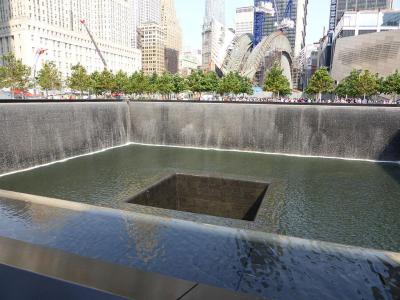
The National September 11 Memorial & Museum is a memorial and museum in New York City commemorating the September 11, 2001, and the 1993 World Trade Center bombing attacks. By November 2003, the memorial design project had been awarded to architect Michael Arad and landscape architect Peter Walker. Their memorial is called "Reflecting Absence." It is a forest of white oak trees surrounding two recessed pools formed by the footprints of the Twin Towers.
The park is level with the street. The names of victims who died from the attacks, including the 1993 bombing, are inscribed on parapets around the waterfalls. The waterfalls are intended to mute outside noises and create a meditative atmosphere at the site.
A callery pear tree that survived, called the "Survivor Tree," was replanted at the World Trade Center. It is thriving. Six other "survivor" pear trees and linden trees have been planted at other sites.
The "Memorial Glade" is a path that follows a temporary ramp used by first responders. It has six enormous stones that jut up through the ground as if violently pushed. The stones simply "strength and resistance."
The September 11 Museum at the site opened in May 2014. It has a collection of over 40,000 images, 14,000 artifacts, and about 3,500 recordings, including 500 hours of videos. There are steel items from the towers, such as the "Last Column." The museum is designed by the architectural firm Davis Brody Bond. It is 70 feet underground, accessible through a pavilion.
The pavilion follows a deconstructivist design, resembling collapsed buildings. Two "tridents" from the towers are inside. One of the museum walls is the old "slurry" wall holding back the Hudson River. The bodies of 1,115 victims were moved to a bedrock crypt space as part of the museum.
The National September 11 Memorial & Museum is a memorial and museum in New York City commemorating the September 11, 2001, and the 1993 World Trade Center bombing attacks. By November 2003, the memorial design project had been awarded to architect Michael Arad and landscape architect Peter Walker. Their memorial is called "Reflecting Absence." It is a forest of white oak trees surrounding two recessed pools formed by the footprints of the Twin Towers.
The park is level with the street. The names of victims who died from the attacks, including the 1993 bombing, are inscribed on parapets around the waterfalls. The waterfalls are intended to mute outside noises and create a meditative atmosphere at the site.
A callery pear tree that survived, called the "Survivor Tree," was replanted at the World Trade Center. It is thriving. Six other "survivor" pear trees and linden trees have been planted at other sites.
The "Memorial Glade" is a path that follows a temporary ramp used by first responders. It has six enormous stones that jut up through the ground as if violently pushed. The stones simply "strength and resistance."
The September 11 Museum at the site opened in May 2014. It has a collection of over 40,000 images, 14,000 artifacts, and about 3,500 recordings, including 500 hours of videos. There are steel items from the towers, such as the "Last Column." The museum is designed by the architectural firm Davis Brody Bond. It is 70 feet underground, accessible through a pavilion.
The pavilion follows a deconstructivist design, resembling collapsed buildings. Two "tridents" from the towers are inside. One of the museum walls is the old "slurry" wall holding back the Hudson River. The bodies of 1,115 victims were moved to a bedrock crypt space as part of the museum.
4) Friends Apartment Building
The Friends Apartment Building is situated in Greenwich Village. People from around the world continue to visit the Friends building, despite the show first airing in 1994. The show remains very popular, and crowds of tourists can often be seen taking photos in front of the building at all hours.
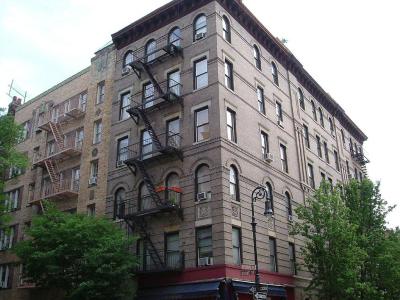
The building itself is fairly ordinary in appearance. It is a six-story tan brick structure built between 1898 and 1899. The New York City Landmarks Preservation Commission records describe it as an ‘old law’ or dumbbell tenement, named for its cut-out air shaft, which provided ventilation and made the building resemble a dumbbell from above. The only notable features are the round-arched windows on the third and sixth floors. The building appeared in a brief shot in the first episode of Friends and remained a key location throughout the series.
Friends continues to be popular for several reasons. The show generates around $1 billion a year in revenue for Warner Brothers and has captured the hearts of a new generation of young adults. The timeless relatability of the show and its characters, along with the nostalgia for the simpler times of the 90s, contribute to its lasting appeal. The characters' portrayal of young adulthood, with its directionlessness and aimlessness, resonates with many viewers today.
The building itself is fairly ordinary in appearance. It is a six-story tan brick structure built between 1898 and 1899. The New York City Landmarks Preservation Commission records describe it as an ‘old law’ or dumbbell tenement, named for its cut-out air shaft, which provided ventilation and made the building resemble a dumbbell from above. The only notable features are the round-arched windows on the third and sixth floors. The building appeared in a brief shot in the first episode of Friends and remained a key location throughout the series.
Friends continues to be popular for several reasons. The show generates around $1 billion a year in revenue for Warner Brothers and has captured the hearts of a new generation of young adults. The timeless relatability of the show and its characters, along with the nostalgia for the simpler times of the 90s, contribute to its lasting appeal. The characters' portrayal of young adulthood, with its directionlessness and aimlessness, resonates with many viewers today.

5) Chelsea Market (must see)
The Chelsea Market stands as a remarkable testament to both redevelopment and preservation, as it has revitalized a former Nabisco factory (where the iconic Oreo cookie was originally crafted), into a bustling shopping destination, appealing to both culinary enthusiasts and fashion aficionados. With over two dozen food vendors to choose from, foodies can revel in a myriad of delectable options. Experience the fusion of Korean flavors with ramen at MOKBAR, savor delectable crepes at BAR SUZETTE, relish in Cambodian sandwiches at NUM PANG, or indulge in piping hot mini-doughnuts at DOUGHNUTTERY. For a more indulgent treat, savor the impeccable seafood and raw bar at CULL & PISTOL, or enjoy upscale American comfort food at Friedman's Lunch.
Those seeking non-food delights may peruse the curated collection of Moroccan art and design at IMPORTS FROM MARRAKESH, explore the latest literary gems at POSMAN BOOKS, find a fashionable outfit at ANTHROPOLOGIE, or browse the expertly-staffed CHELSEA WINE VAULT for a bottle of fine wine. At the Tenth Ave entrance, you'll discover ARTISTS AND FLEAS, a permanent market showcasing the creations of local designers and craftspeople. This vibrant marketplace is the perfect spot to uncover a unique wallet, trendy sunglasses, or a striking statement piece of jewelry.
Those seeking non-food delights may peruse the curated collection of Moroccan art and design at IMPORTS FROM MARRAKESH, explore the latest literary gems at POSMAN BOOKS, find a fashionable outfit at ANTHROPOLOGIE, or browse the expertly-staffed CHELSEA WINE VAULT for a bottle of fine wine. At the Tenth Ave entrance, you'll discover ARTISTS AND FLEAS, a permanent market showcasing the creations of local designers and craftspeople. This vibrant marketplace is the perfect spot to uncover a unique wallet, trendy sunglasses, or a striking statement piece of jewelry.
6) High Line (must see)
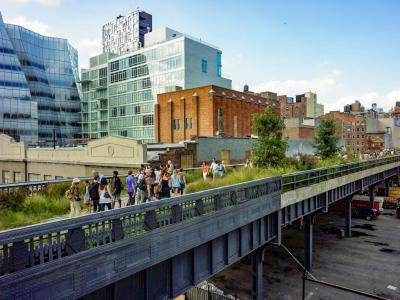
Constructed on a repurposed section of elevated freight train tracks, The High Line offers a dual experience as both an urban sanctuary, providing respite from the bustling city streets, and a tribute to Manhattan's West Side, particularly its remarkable architecture. The initial segment, spanning from Gansevoort Street to West 20th Street, opened in 2009 and became an instant hit, demonstrating that open spaces could be trendy and fashionable. This sudden success also caught the attention of the city tax assessor, who saw the surrounding properties in a new light. The park's second section opened in June 2011, doubling its length to 30th Street. The third section, completed in 2014, extends along the elevated tracks until 34th Street.
The High Line incorporates various environmentally friendly features, starting with the plant life that reflects the native ecology of the region, with half of the plants being indigenous to North America and 30% native to the Northeast. This design attracts birds and butterflies, creating a natural habitat. Additionally, the park employs rainwater absorption systems, preventing water from simply flowing into gutters. While the park aims for a low environmental impact, it has undeniably made a significant impact on the surrounding neighborhood. Not only does it offer an aesthetically pleasing pathway to the heart of Chelsea's art galleries, but it has also acted as a catalyst for both architectural and cultural developments, including the relocation of The Whitney Museum to the Meatpacking District.
By glancing upwards, visitors can appreciate the surrounding architecture. The High Line is flanked by notable structures such as The Standard, located just south of 14th Street, which features an upscale restaurant and a beer garden beneath the park. Other architectural gems visible from the High Line include Frank Gehry's first commercial office building in New York, the IAC Building owned by Barry Diller, and Jean Nouvel's 100 Eleventh Avenue condo building across the street. The IAC Building captivates with its radiant appearance, while Nouvel's facade, composed of variously sized glass panes, has become an instant classic.
The architectural brilliance of the High Line itself is simply awe-inspiring. Visitors particularly enjoy the 10th Avenue Square area, featuring amphitheater-style seating and a view of the northbound traffic on Tenth Avenue, making it a favorite spot for picnics (adjacent to the nearby Chelsea Market food vendors).
While the High Line can get crowded on weekends during the summer, taking an early morning or evening stroll is highly recommended. The nighttime cityscape views are breathtaking, while early mornings offer a tranquil and refreshing experience until the sun rises above the skyscrapers to the east of the park. In truth, any time of day is perfect for a visit to the High Line as the views are always splendid.
Tip:
Food enthusiasts will find a plethora of excellent dining options nearby. Hip establishments like Cookshop and cozy Italian eatery Bottino are great choices. For more affordable meals, try the classic diner Hector's or wait for the arrival of gourmet food trucks around the corner from the Gansevoort stairs. Alternatively, you can explore the culinary delights of Chelsea Market.
The High Line incorporates various environmentally friendly features, starting with the plant life that reflects the native ecology of the region, with half of the plants being indigenous to North America and 30% native to the Northeast. This design attracts birds and butterflies, creating a natural habitat. Additionally, the park employs rainwater absorption systems, preventing water from simply flowing into gutters. While the park aims for a low environmental impact, it has undeniably made a significant impact on the surrounding neighborhood. Not only does it offer an aesthetically pleasing pathway to the heart of Chelsea's art galleries, but it has also acted as a catalyst for both architectural and cultural developments, including the relocation of The Whitney Museum to the Meatpacking District.
By glancing upwards, visitors can appreciate the surrounding architecture. The High Line is flanked by notable structures such as The Standard, located just south of 14th Street, which features an upscale restaurant and a beer garden beneath the park. Other architectural gems visible from the High Line include Frank Gehry's first commercial office building in New York, the IAC Building owned by Barry Diller, and Jean Nouvel's 100 Eleventh Avenue condo building across the street. The IAC Building captivates with its radiant appearance, while Nouvel's facade, composed of variously sized glass panes, has become an instant classic.
The architectural brilliance of the High Line itself is simply awe-inspiring. Visitors particularly enjoy the 10th Avenue Square area, featuring amphitheater-style seating and a view of the northbound traffic on Tenth Avenue, making it a favorite spot for picnics (adjacent to the nearby Chelsea Market food vendors).
While the High Line can get crowded on weekends during the summer, taking an early morning or evening stroll is highly recommended. The nighttime cityscape views are breathtaking, while early mornings offer a tranquil and refreshing experience until the sun rises above the skyscrapers to the east of the park. In truth, any time of day is perfect for a visit to the High Line as the views are always splendid.
Tip:
Food enthusiasts will find a plethora of excellent dining options nearby. Hip establishments like Cookshop and cozy Italian eatery Bottino are great choices. For more affordable meals, try the classic diner Hector's or wait for the arrival of gourmet food trucks around the corner from the Gansevoort stairs. Alternatively, you can explore the culinary delights of Chelsea Market.

7) Times Square (must see)
Long before Manhattan’s tidy street plan straightened everything out, Broadway, unlike other streets in New York, followed an older native pathway, wandering freely up the island. This is why it slices across Seventh Avenue and 42nd Street, forming two triangular pockets, like a bow tie. The southern one is called Times Square, while the northern, Duffy Square, is named for World War I chaplain Father Francis P. Duffy, whose statue now watches over the crowds with admirable patience.
The stretch of Broadway from 41st to 53rd Streets goes by a different name: the Great White Way. That nickname wasn’t poetic exaggeration—those glowing billboards, marquees, and oversized posters once made the area one of the brightest electrified spots on Earth. Today, it’s still blazing away with advertisements for Broadway’s latest musicals and plays, pulling in nearly 50 million visitors a year. That’s roughly 330,000 people a day, all weaving through the lights, noise, and spectacle in search of something unforgettable.
Before it was Times Square, this chaotic crossroads answered to the far calmer name of Longacre Square. Everything changed in 1904, when New York Times publisher Adolph S. Ochs moved his newspaper into the brand-new Times Building—now known as One Times Square—and happily lent his name to the neighborhood. The Times moved out within a decade, but not before launching a little tradition in 1907: the New Year’s Eve Ball Drop. A century later, the glittering descent still draws over a million people every year, along with countless viewers around the world.
Today, Times Square is a fluorescent buffet of attractions—ABC’s Times Square Studios, Planet Hollywood, Bubba Gump Shrimp Company, and whichever character impersonator is bravest that day. The towering illuminated signs, nicknamed “spectaculars” or “jumbotrons,” compete with the neon bravado of Las Vegas and often win.
Amid all that glow, shoppers duck into stores like Gap, Old Navy, Forever 21, Levi’s, the Disney Store, Hershey’s Chocolate World, and M&M’s World—each one flashing its own brand of temptation. Whether you’re hunting for a souvenir, a show, or just a moment to stand still and stare, this Midtown crossroads remains New York at its most unfiltered and unmistakable.
The stretch of Broadway from 41st to 53rd Streets goes by a different name: the Great White Way. That nickname wasn’t poetic exaggeration—those glowing billboards, marquees, and oversized posters once made the area one of the brightest electrified spots on Earth. Today, it’s still blazing away with advertisements for Broadway’s latest musicals and plays, pulling in nearly 50 million visitors a year. That’s roughly 330,000 people a day, all weaving through the lights, noise, and spectacle in search of something unforgettable.
Before it was Times Square, this chaotic crossroads answered to the far calmer name of Longacre Square. Everything changed in 1904, when New York Times publisher Adolph S. Ochs moved his newspaper into the brand-new Times Building—now known as One Times Square—and happily lent his name to the neighborhood. The Times moved out within a decade, but not before launching a little tradition in 1907: the New Year’s Eve Ball Drop. A century later, the glittering descent still draws over a million people every year, along with countless viewers around the world.
Today, Times Square is a fluorescent buffet of attractions—ABC’s Times Square Studios, Planet Hollywood, Bubba Gump Shrimp Company, and whichever character impersonator is bravest that day. The towering illuminated signs, nicknamed “spectaculars” or “jumbotrons,” compete with the neon bravado of Las Vegas and often win.
Amid all that glow, shoppers duck into stores like Gap, Old Navy, Forever 21, Levi’s, the Disney Store, Hershey’s Chocolate World, and M&M’s World—each one flashing its own brand of temptation. Whether you’re hunting for a souvenir, a show, or just a moment to stand still and stare, this Midtown crossroads remains New York at its most unfiltered and unmistakable.
