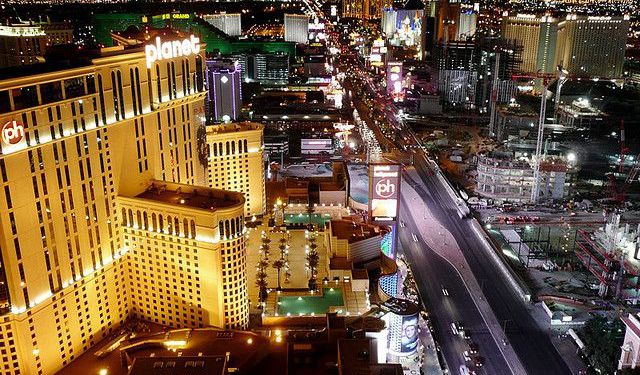


Las Vegas Boulevard Walking Tour (Self Guided), Las Vegas
“What happens in Las Vegas, stays in Las Vegas.”
Las Vegas began as a desert oasis long before it became synonymous with neon lights and casinos. The area was originally inhabited by Southern Paiute peoples, who relied on natural artesian springs that surfaced in what is now the Las Vegas Valley. The name Las Vegas comes from Spanish and means “the meadows”. It was given in 1829 by Mexican explorer Antonio Armijo, who led a trading caravan along the Old Spanish Trail between New Mexico and California.
The modern history of Las Vegas began in 1905, when the arrival of the railroad connecting Los Angeles and Salt Lake City turned the valley into a transportation hub. That same year, land was auctioned near the tracks, marking the official founding of the city. Early Las Vegas was a rough frontier town, catering to railroad workers, miners, and travelers with saloons, boarding houses, and entertainment venues.
A decisive turning point came in 1931, during the Great Depression. Nevada legalized gambling, and construction began on Hoover Dam, just southeast of the city. Thousands of workers poured into the area, creating demand for housing, entertainment, and nightlife. Casinos and showrooms soon followed, particularly along what would become the Las Vegas Strip, located just outside city limits to avoid local regulations.
From the 1940s through the 1960s, Las Vegas grew rapidly, shaped by luxury resort development and, at times, organized crime investment. Early Strip resorts such as the Flamingo introduced the idea of the casino as a full-scale destination, combining gambling with hotels, fine dining, and headline entertainment. By the late 20th century, corporate ownership replaced mob influence, leading to the rise of massive themed resorts and convention facilities.
Today, Las Vegas is a global tourism and entertainment capital, known not only for casinos but also for live shows, sporting events, dining, and large-scale conventions. Walking through the heart of the Las Vegas Strip, visitors encounter a dense collage of themed landmarks and nonstop spectacle. Highlights include the skyline replicas of New York-New York Hotel & Casino, the vast MGM Grand Hotel and Casino, and the indoor bustle of Miracle Mile Shops. The Eiffel Tower at Paris Las Vegas, the choreographed Bellagio Fountains, and the grandeur of Caesars Palace draw constant crowds.
As the motto says, “What happens in Las Vegas, stays in Las Vegas.” The phrase neatly captures a city that has always invited reinvention, escape, and spectacle. From desert springs and railroad camps to neon-lit resorts and global landmarks, Las Vegas has continually rewritten itself.
Las Vegas began as a desert oasis long before it became synonymous with neon lights and casinos. The area was originally inhabited by Southern Paiute peoples, who relied on natural artesian springs that surfaced in what is now the Las Vegas Valley. The name Las Vegas comes from Spanish and means “the meadows”. It was given in 1829 by Mexican explorer Antonio Armijo, who led a trading caravan along the Old Spanish Trail between New Mexico and California.
The modern history of Las Vegas began in 1905, when the arrival of the railroad connecting Los Angeles and Salt Lake City turned the valley into a transportation hub. That same year, land was auctioned near the tracks, marking the official founding of the city. Early Las Vegas was a rough frontier town, catering to railroad workers, miners, and travelers with saloons, boarding houses, and entertainment venues.
A decisive turning point came in 1931, during the Great Depression. Nevada legalized gambling, and construction began on Hoover Dam, just southeast of the city. Thousands of workers poured into the area, creating demand for housing, entertainment, and nightlife. Casinos and showrooms soon followed, particularly along what would become the Las Vegas Strip, located just outside city limits to avoid local regulations.
From the 1940s through the 1960s, Las Vegas grew rapidly, shaped by luxury resort development and, at times, organized crime investment. Early Strip resorts such as the Flamingo introduced the idea of the casino as a full-scale destination, combining gambling with hotels, fine dining, and headline entertainment. By the late 20th century, corporate ownership replaced mob influence, leading to the rise of massive themed resorts and convention facilities.
Today, Las Vegas is a global tourism and entertainment capital, known not only for casinos but also for live shows, sporting events, dining, and large-scale conventions. Walking through the heart of the Las Vegas Strip, visitors encounter a dense collage of themed landmarks and nonstop spectacle. Highlights include the skyline replicas of New York-New York Hotel & Casino, the vast MGM Grand Hotel and Casino, and the indoor bustle of Miracle Mile Shops. The Eiffel Tower at Paris Las Vegas, the choreographed Bellagio Fountains, and the grandeur of Caesars Palace draw constant crowds.
As the motto says, “What happens in Las Vegas, stays in Las Vegas.” The phrase neatly captures a city that has always invited reinvention, escape, and spectacle. From desert springs and railroad camps to neon-lit resorts and global landmarks, Las Vegas has continually rewritten itself.
How it works: Download the app "GPSmyCity: Walks in 1K+ Cities" from Apple App Store or Google Play Store to your mobile phone or tablet. The app turns your mobile device into a personal tour guide and its built-in GPS navigation functions guide you from one tour stop to next. The app works offline, so no data plan is needed when traveling abroad.
Download The GPSmyCity App


Las Vegas Boulevard Walking Tour Map
Guide Name: Las Vegas Boulevard Walking Tour
Guide Location: USA » Las Vegas (See other walking tours in Las Vegas)
Guide Type: Self-guided Walking Tour (Sightseeing)
# of Attractions: 12
Tour Duration: 2 Hour(s)
Travel Distance: 3.4 Km or 2.1 Miles
Author: julia
Sight(s) Featured in This Guide:
Guide Location: USA » Las Vegas (See other walking tours in Las Vegas)
Guide Type: Self-guided Walking Tour (Sightseeing)
# of Attractions: 12
Tour Duration: 2 Hour(s)
Travel Distance: 3.4 Km or 2.1 Miles
Author: julia
Sight(s) Featured in This Guide:
- New York-New York Hotel & Casino
- MGM Grand Hotel and Casino
- Miracle Mile Shops
- Paris Las Vegas Hotel
- Eiffel Tower at the Paris Las Vegas Hotel
- Bellagio Fountains
- Caesars Palace Las Vegas Hotel and Casino
- Flamingo Las Vegas
- The LINQ Promenade
- Madame Tussauds Las Vegas
- The Canals of The Venetian Resort, Hotel and Casino
- The Palazzo Resort, Hotel & Casino

1) New York-New York Hotel & Casino (must see)
The New York-New York Hotel and Casino celebrates the spirit of New York City through distinctive architecture and themed attractions. Owned by Vici Properties and operated by MGM Resorts International, the resort pays homage to the New York City with a series of replicas and design elements.
Guests are welcomed by scaled-down landmarks such as the Statue of Liberty, while the hotel tower itself forms a stylized skyline of New York skyscrapers. The most prominent feature is a 47-story imitation of the Empire State Building, which rises to 529 feet. Remarkably, it held the distinction of being Nevada’s tallest building until the debut of Wynn Las Vegas in 2005. Among the resort’s attractions is the Big Apple Coaster, a thrilling ride that loops around the hotel tower. Inside, the 51,765-square-foot casino provides ample room for gaming, and the hotel offers 2,024 guest rooms.
Construction began in March 1995, and the resort officially opened on January 3, 1997, as a joint venture between MGM and Primadonna Resorts. MGM later purchased Primadonna’s share in 1999, becoming the sole owner. Following the tragic events of September 11, 2001, visitors created a spontaneous memorial near the Statue of Liberty replica. In 2003, an official memorial was installed, though it was removed a decade later during a renovation of the facade. That same redevelopment phase brought a new feature: Hershey’s Chocolate World, which opened in 2014 and added a playful touch to the resort’s lineup.
Throughout its history, New York-New York has hosted a variety of entertainers and resident shows. Comedian Rita Rudner performed there from 2001 to 2006, and the acclaimed Cirque du Soleil production Zumanity ran from 2003 to 2020, leaving a lasting impression on audiences.
Guests are welcomed by scaled-down landmarks such as the Statue of Liberty, while the hotel tower itself forms a stylized skyline of New York skyscrapers. The most prominent feature is a 47-story imitation of the Empire State Building, which rises to 529 feet. Remarkably, it held the distinction of being Nevada’s tallest building until the debut of Wynn Las Vegas in 2005. Among the resort’s attractions is the Big Apple Coaster, a thrilling ride that loops around the hotel tower. Inside, the 51,765-square-foot casino provides ample room for gaming, and the hotel offers 2,024 guest rooms.
Construction began in March 1995, and the resort officially opened on January 3, 1997, as a joint venture between MGM and Primadonna Resorts. MGM later purchased Primadonna’s share in 1999, becoming the sole owner. Following the tragic events of September 11, 2001, visitors created a spontaneous memorial near the Statue of Liberty replica. In 2003, an official memorial was installed, though it was removed a decade later during a renovation of the facade. That same redevelopment phase brought a new feature: Hershey’s Chocolate World, which opened in 2014 and added a playful touch to the resort’s lineup.
Throughout its history, New York-New York has hosted a variety of entertainers and resident shows. Comedian Rita Rudner performed there from 2001 to 2006, and the acclaimed Cirque du Soleil production Zumanity ran from 2003 to 2020, leaving a lasting impression on audiences.

2) MGM Grand Hotel and Casino (must see)
The MGM Grand Las Vegas is one of the most instantly recognizable landmarks on the Las Vegas Strip, known as much for its scale as for its constant buzz of activity. With 6,852 rooms, it remains one of the largest single building hotels in the US. When it opened in 1993, it set a global record, briefly redefining what a mega-resort could be.
Owned by Vici Properties and operated by MGM Resorts International, the main hotel tower rises 30 stories and reaches a height of 293 feet. The resort unfolds across a vast footprint, anchored by a 6.6-acre outdoor pool complex featuring multiple swimming areas, a lazy river, waterfalls, and cabanas that feel closer to a water park than a traditional hotel pool.
Inside, the convention center positions the MGM Grand as a major venue for international conferences and trade shows, while the MGM Grand Garden Arena regularly hosts headline concerts, championship boxing matches, and large-scale sporting events. The Grand Spa adds a quieter counterpoint, offering a full menu of treatments away from the casino floor.
Entertainment and nightlife are central to the MGM Grand’s identity. The casino, the largest in Clark County at 171,500 square feet, forms the energetic core of the resort, surrounded by a dense mix of restaurants, bars, lounges, and nightclubs. Over the years, the property has also been home to long-running stage productions, high-profile residencies, and rotating live shows, reinforcing its role as both a hotel and an entertainment hub. Connected to neighboring resorts by overhead pedestrian bridges, the MGM Grand allows visitors to move easily toward the Tropicana to the south and New York-New York to the west, keeping foot traffic flowing without crossing the busy intersection below.
Owned by Vici Properties and operated by MGM Resorts International, the main hotel tower rises 30 stories and reaches a height of 293 feet. The resort unfolds across a vast footprint, anchored by a 6.6-acre outdoor pool complex featuring multiple swimming areas, a lazy river, waterfalls, and cabanas that feel closer to a water park than a traditional hotel pool.
Inside, the convention center positions the MGM Grand as a major venue for international conferences and trade shows, while the MGM Grand Garden Arena regularly hosts headline concerts, championship boxing matches, and large-scale sporting events. The Grand Spa adds a quieter counterpoint, offering a full menu of treatments away from the casino floor.
Entertainment and nightlife are central to the MGM Grand’s identity. The casino, the largest in Clark County at 171,500 square feet, forms the energetic core of the resort, surrounded by a dense mix of restaurants, bars, lounges, and nightclubs. Over the years, the property has also been home to long-running stage productions, high-profile residencies, and rotating live shows, reinforcing its role as both a hotel and an entertainment hub. Connected to neighboring resorts by overhead pedestrian bridges, the MGM Grand allows visitors to move easily toward the Tropicana to the south and New York-New York to the west, keeping foot traffic flowing without crossing the busy intersection below.

3) Miracle Mile Shops
Miracle Mile Shops is one of the most lively indoor attractions on the Las Vegas Strip — a 1.2-mile climate-controlled shopping and entertainment complex packed with experiences for all ages. Its name evokes the energetic retail districts found across the United States, and the venue was officially rebranded as Miracle Mile Shops in 2007 after being sold in 2003.
The mall is home to over 170 shops featuring a mix of popular national brands, boutique retailers, and specialty stores. You’ll find fashion and accessories from names like H&M, Sephora, MAC Cosmetics, Tommy Bahama, Victoria’s Secret, Aldo, and more — plus unique boutiques and souvenir spots perfect for Vegas keepsakes.
Miracle Mile Shops offers a diverse selection of dining options, from quick bites to sit-down meals and bars. Options include casual favorites like Chipotle and Panda Express, seafood and steakhouse-style venues, lively bars such as Fat Tuesday and Tipsy Robot — a robot-operated cocktail bar.
Entertainment is a big part of the experience. The mall hosts multiple live show venues where you can see variety acts, comedy, music, magic, and more — there’s something happening most nights. One of the coolest free attractions inside the mall is the indoor Rainstorm Show. At scheduled times throughout the day, a dramatic artificial storm unfolds in the central atrium with real rain, thunder, lightning effects, fog, and lighting.
The mall is home to over 170 shops featuring a mix of popular national brands, boutique retailers, and specialty stores. You’ll find fashion and accessories from names like H&M, Sephora, MAC Cosmetics, Tommy Bahama, Victoria’s Secret, Aldo, and more — plus unique boutiques and souvenir spots perfect for Vegas keepsakes.
Miracle Mile Shops offers a diverse selection of dining options, from quick bites to sit-down meals and bars. Options include casual favorites like Chipotle and Panda Express, seafood and steakhouse-style venues, lively bars such as Fat Tuesday and Tipsy Robot — a robot-operated cocktail bar.
Entertainment is a big part of the experience. The mall hosts multiple live show venues where you can see variety acts, comedy, music, magic, and more — there’s something happening most nights. One of the coolest free attractions inside the mall is the indoor Rainstorm Show. At scheduled times throughout the day, a dramatic artificial storm unfolds in the central atrium with real rain, thunder, lightning effects, fog, and lighting.

4) Paris Las Vegas Hotel
If you have never had the chance to visit Paris, France, the Paris Las Vegas Hotel offers a taste of the French capital in the heart of Nevada. Located along the lively Las Vegas Strip, this hotel and casino is a well-known landmark, recognized for its themed architecture and sweeping views. True to its name, the resort draws inspiration from Paris, expressed through a collection of scaled replicas of famous Parisian landmarks spread across the property.
The 33-story complex aims to capture the visual character of Paris, with a facade inspired by the Paris Opera and the Louvre. Visitors can spot a three-quarter-scale replica of the Triumphal Arch, a reproduction of the Fountain of the Seas, the Theater of the Arts, and a half-scale Eiffel Tower. One of the most distinctive architectural touches is the way the tower’s rear supports extend down through the ceiling and into the casino floor below.
Inside, the casino offers a wide range of gaming options, including more than 100 table games, approximately 2,200 slot machines, a dedicated poker room, and a sports and race book. Dining is equally varied, with 12 restaurants across the resort, including a well-known venue located on the 11th level of the Eiffel Tower. Several bars and a nightclub add to the resort’s late-night atmosphere.
Entertainment continues at the Paris Theater and nearby lounges, which have hosted live shows featuring performers such as hypnotist Anthony Cools and productions like The Magic of Paris. To complete the experience, the Boulevard shopping mall recreates the feel of Parisian streets, with cobblestone walkways lined by cafes, bars, and boutiques, reinforcing the resort’s European theme.
The 33-story complex aims to capture the visual character of Paris, with a facade inspired by the Paris Opera and the Louvre. Visitors can spot a three-quarter-scale replica of the Triumphal Arch, a reproduction of the Fountain of the Seas, the Theater of the Arts, and a half-scale Eiffel Tower. One of the most distinctive architectural touches is the way the tower’s rear supports extend down through the ceiling and into the casino floor below.
Inside, the casino offers a wide range of gaming options, including more than 100 table games, approximately 2,200 slot machines, a dedicated poker room, and a sports and race book. Dining is equally varied, with 12 restaurants across the resort, including a well-known venue located on the 11th level of the Eiffel Tower. Several bars and a nightclub add to the resort’s late-night atmosphere.
Entertainment continues at the Paris Theater and nearby lounges, which have hosted live shows featuring performers such as hypnotist Anthony Cools and productions like The Magic of Paris. To complete the experience, the Boulevard shopping mall recreates the feel of Parisian streets, with cobblestone walkways lined by cafes, bars, and boutiques, reinforcing the resort’s European theme.
5) Eiffel Tower at the Paris Las Vegas Hotel (must see)
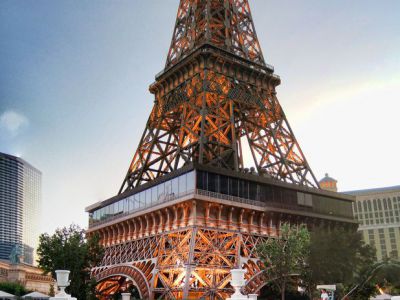
Inspired by its Parisian counterpart, the Eiffel Tower replica, one of the city’s most romantic landmarks, is a defining feature of the Paris Las Vegas Hotel, which embraces the visual and cultural themes of the French capital.
One of the tower’s main attractions is its observation deck, set at approximately 460 feet above the ground, offering expansive panoramic views of the Las Vegas Strip and surrounding valley. The property is owned and operated by Caesars Entertainment. Early plans called for a full-scale replica of the original Eiffel Tower, but its proximity to Harry Reid International Airport required a reduction in height. As a result, the structure was built to a still-impressive height of 540 feet, ensuring it would not interfere with air traffic.
Paris Las Vegas officially opened on September 1, 1999, marked by a fireworks display launched from the tower itself. A distinctive architectural feature of the complex is the way the tower’s rear supports descend through the ceiling and into the casino floor below. This interior space is decorated with French-style wrought-iron streetlamps, while the ceiling is painted to resemble an open sky, enhancing the illusion of an outdoor Parisian setting.
Inside the tower is the Eiffel Tower Restaurant, known for its fine dining and elevated views, as well as the Eiffel Tower Experience, which serves as one of the resort’s signature attractions. Since its debut, the tower has appeared in numerous films and television productions, including 10.5: Apocalypse, Resident Evil: Extinction, Godzilla, and the post-credits scene of Jurassic World: Fallen Kingdom.
Tip:
Some areas feature transparent floor sections and it may be challenging for those with a fear of heights.
One of the tower’s main attractions is its observation deck, set at approximately 460 feet above the ground, offering expansive panoramic views of the Las Vegas Strip and surrounding valley. The property is owned and operated by Caesars Entertainment. Early plans called for a full-scale replica of the original Eiffel Tower, but its proximity to Harry Reid International Airport required a reduction in height. As a result, the structure was built to a still-impressive height of 540 feet, ensuring it would not interfere with air traffic.
Paris Las Vegas officially opened on September 1, 1999, marked by a fireworks display launched from the tower itself. A distinctive architectural feature of the complex is the way the tower’s rear supports descend through the ceiling and into the casino floor below. This interior space is decorated with French-style wrought-iron streetlamps, while the ceiling is painted to resemble an open sky, enhancing the illusion of an outdoor Parisian setting.
Inside the tower is the Eiffel Tower Restaurant, known for its fine dining and elevated views, as well as the Eiffel Tower Experience, which serves as one of the resort’s signature attractions. Since its debut, the tower has appeared in numerous films and television productions, including 10.5: Apocalypse, Resident Evil: Extinction, Godzilla, and the post-credits scene of Jurassic World: Fallen Kingdom.
Tip:
Some areas feature transparent floor sections and it may be challenging for those with a fear of heights.
6) Bellagio Fountains (must see)
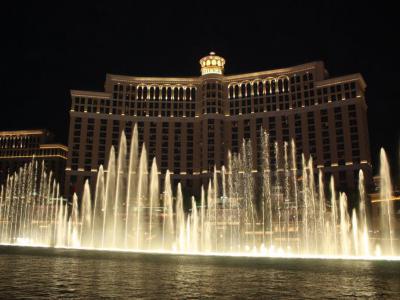
The Fountains of Bellagio are an expansive water feature known for their precisely synchronized performances combining water, light, and music. These displays take place in front of the Bellagio Hotel and can be viewed from numerous vantage points along the Las Vegas Strip. Shows typically run every 30 minutes during the afternoon and early evening, increasing to every 15 minutes from 8:00 pm until midnight. Just before each performance begins, the fountain nozzles rise above the water’s surface, and the lights illuminating the hotel tower usually shift to purple, or occasionally to red, white, and blue for selected musical themes.
The fountains operate within an eight-acre man-made lake. Contrary to popular belief, the lake is not filled with treated graywater from the hotel. Instead, it is supplied by a freshwater well drilled decades ago to irrigate a former golf course that once occupied the site. Notably, the fountains use less water than was required to maintain the golf course. A complex underground system of pipes and machinery supports more than 1,200 water nozzles and over 4,500 lights, allowing for the precise coordination of each performance.
At times, performances may be adjusted or temporarily canceled due to strong winds. Special fountain shows can be arranged for significant occasions, including weddings. Each display is carefully choreographed to a wide range of music. Often featured is the Whitney Houston’s “The Star-Spangled Banner", followed by selections such as "Time to Say Goodbye" by Andrea Bocelli, "God Bless the USA" by Lee Greenwood, "Your Song" by Elton John, etc.
The fountains operate within an eight-acre man-made lake. Contrary to popular belief, the lake is not filled with treated graywater from the hotel. Instead, it is supplied by a freshwater well drilled decades ago to irrigate a former golf course that once occupied the site. Notably, the fountains use less water than was required to maintain the golf course. A complex underground system of pipes and machinery supports more than 1,200 water nozzles and over 4,500 lights, allowing for the precise coordination of each performance.
At times, performances may be adjusted or temporarily canceled due to strong winds. Special fountain shows can be arranged for significant occasions, including weddings. Each display is carefully choreographed to a wide range of music. Often featured is the Whitney Houston’s “The Star-Spangled Banner", followed by selections such as "Time to Say Goodbye" by Andrea Bocelli, "God Bless the USA" by Lee Greenwood, "Your Song" by Elton John, etc.

7) Caesars Palace Las Vegas Hotel and Casino (must see)
Since opening in 1966, Caesars Palace has drawn visitors with its unmistakable Las Vegas grandeur, shaped by a theatrical interpretation of Greco-Roman style. Designed to evoke the world of the Roman Empire as imagined by classic Hollywood epics, the complex is richly decorated with statues, columns, and monumental architectural details. At the main entrance, a commanding 20-foot statue of Augustus Caesar immediately sets the tone.
The hotel comprises six towers—Augustus, Nobu, Julius, Palace, Octavius, and Forum—offering a total of 3,976 rooms. The Forum Tower features spacious guest suites, each measuring approximately 1,000 square feet. Dining options across the resort are equally varied, ranging from specialized authentic Chinese cuisine tailored to high-end East Asian clientele to venues such as Gordon Ramsay Pub & Grill, styled after a traditional English pub.
Over the decades, Caesars Palace has built a strong reputation as a premier venue for live entertainment and sporting events. It has hosted major boxing matches since the late 1970s and welcomed an extraordinary lineup of performers, including Frank Sinatra, Ella Fitzgerald, Dean Martin, Rod Stewart, Céline Dion, and many others.
Water features play a prominent role throughout the resort, with at least 18 fountains enhancing its dramatic setting. Among them is The Fall of Atlantis, a fountain attraction that combines special effects and animated figures to tell the mythical story of Atlantis. Enter the hotel and continue straight into the Forum Shops area. Follow signs for The Fall of Atlantis; the fountain is located near the center of the shopping complex, opening into a circular plaza.
Leaving the Atlantis fountain, walk back toward the main entrance corridor. As you approach the driveway area again, you’ll encounter another figure of Julius Caesar. Replicas inspired by The Rape of the Sabine Women, along with statues of Venus and David, appear along walkways and interior courtyards, often positioned near columns and fountain pools. Close to the entrance, visitors will also find an unexpected highlight: a four-faced, eight-armed Brahma shrine, weighing approximately four tons and crafted in Thailand.
The hotel comprises six towers—Augustus, Nobu, Julius, Palace, Octavius, and Forum—offering a total of 3,976 rooms. The Forum Tower features spacious guest suites, each measuring approximately 1,000 square feet. Dining options across the resort are equally varied, ranging from specialized authentic Chinese cuisine tailored to high-end East Asian clientele to venues such as Gordon Ramsay Pub & Grill, styled after a traditional English pub.
Over the decades, Caesars Palace has built a strong reputation as a premier venue for live entertainment and sporting events. It has hosted major boxing matches since the late 1970s and welcomed an extraordinary lineup of performers, including Frank Sinatra, Ella Fitzgerald, Dean Martin, Rod Stewart, Céline Dion, and many others.
Water features play a prominent role throughout the resort, with at least 18 fountains enhancing its dramatic setting. Among them is The Fall of Atlantis, a fountain attraction that combines special effects and animated figures to tell the mythical story of Atlantis. Enter the hotel and continue straight into the Forum Shops area. Follow signs for The Fall of Atlantis; the fountain is located near the center of the shopping complex, opening into a circular plaza.
Leaving the Atlantis fountain, walk back toward the main entrance corridor. As you approach the driveway area again, you’ll encounter another figure of Julius Caesar. Replicas inspired by The Rape of the Sabine Women, along with statues of Venus and David, appear along walkways and interior courtyards, often positioned near columns and fountain pools. Close to the entrance, visitors will also find an unexpected highlight: a four-faced, eight-armed Brahma shrine, weighing approximately four tons and crafted in Thailand.
8) Flamingo Las Vegas
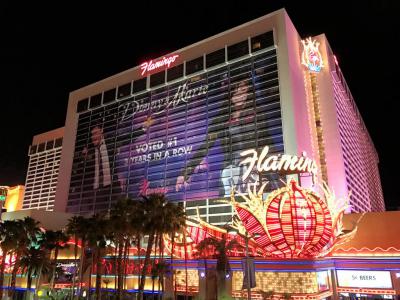
Flamingo Las Vegas traces its origins to a luxury resort project initially conceived in 1945 by Billy Wilkerson, founder of The Hollywood Reporter. Wilkerson envisioned a stylish, resort-style casino along the highway to Los Angeles that would appeal to an upscale clientele. When construction costs escalated and funding ran short, Bugsy Siegel and his mob-connected partners forced their way into the project and ultimately took control, reshaping its development and accelerating construction. Although the hotel first opened in 1946 amid financial difficulties and Siegel was assassinated in 1947, the Flamingo later reopened successfully and became a defining model for the modern Las Vegas Strip resort.
Architecturally, the Flamingo stands out for its Art Deco and Streamline Moderne influences, inspired by the resort architecture of Miami and South Beach. This lighter, more elegant design marked a clear departure from earlier Western-themed casinos and helped set a new visual direction for Las Vegas. Staying true to its name, the property features a landscaped Wildlife Habitat, where visitors can see live flamingos, koi fish, turtles, and other birds in a tranquil garden setting.
Today, Flamingo Las Vegas is owned and operated by Caesars Entertainment and functions as a full-scale resort rather than a historical curiosity. Visitors can explore the casino floor, relax at the multi-pool complex, stroll through the wildlife habitat, or enjoy the range of restaurants, bars, and live entertainment venues on-site. The Flamingo Showroom continues to host rotating productions and residencies, while its central Strip location offers easy access to neighboring resorts. A small memorial to Bugsy Siegel remains near the Wedding Chapel, quietly acknowledging the resort’s dramatic early history.
Architecturally, the Flamingo stands out for its Art Deco and Streamline Moderne influences, inspired by the resort architecture of Miami and South Beach. This lighter, more elegant design marked a clear departure from earlier Western-themed casinos and helped set a new visual direction for Las Vegas. Staying true to its name, the property features a landscaped Wildlife Habitat, where visitors can see live flamingos, koi fish, turtles, and other birds in a tranquil garden setting.
Today, Flamingo Las Vegas is owned and operated by Caesars Entertainment and functions as a full-scale resort rather than a historical curiosity. Visitors can explore the casino floor, relax at the multi-pool complex, stroll through the wildlife habitat, or enjoy the range of restaurants, bars, and live entertainment venues on-site. The Flamingo Showroom continues to host rotating productions and residencies, while its central Strip location offers easy access to neighboring resorts. A small memorial to Bugsy Siegel remains near the Wedding Chapel, quietly acknowledging the resort’s dramatic early history.

9) The LINQ Promenade (must see)
The LINQ Promenade is a lively open-air entertainment and dining district designed as a pedestrian-friendly alternative to the Strip’s large casino interiors. It offers a relaxed space to walk, dine, and explore under open skies, right in the center of Las Vegas.
Since opening on March 31, 2014, the Promenade has developed into a 300,000-square-foot complex featuring around 40 retail, dining, and entertainment venues. Well-known names such as In-N-Out Burger, Yard House, Gordon Ramsay Fish & Chips, and Ghirardelli Ice Cream and Chocolate Shop anchor its culinary lineup, alongside bars, casual eateries, and specialty shops.
Walk east into the open-air promenade. Almost immediately, your attention is drawn upward to the High Roller, the district’s most recognizable landmark. Rising 550 feet above the Strip, it stands slightly to the south as you walk in. Follow the promenade toward the base of the wheel to reach the boarding area, where enclosed cabins lift riders roughly 55 stories high for sweeping, 360-degree views of Las Vegas and the surrounding valley.
From the High Roller plaza, continue east along the promenade. A short walk brings you to Brooklyn Bowl, located on then north side of the walkway. Its entrance is marked by bold signage and an energetic crowd. Inside, the venue combines a concert hall, restaurant, and 32 bowling lanes, and it regularly hosts live music and late-night events, making it one of the promenade’s main nightlife anchors.
For something more adrenaline-driven, FLY LINQ Zipline starts right at the west end of the promenade near the Strip entrance. Riders launch from a 12-story tower and fly eastward down the length of the promenade for about 1,121 feet, finishing at a landing point near the base of the High Roller. The ride is offered in both a seated style and a “superhero” style, so you can choose how intense you want it to feel.
Since opening on March 31, 2014, the Promenade has developed into a 300,000-square-foot complex featuring around 40 retail, dining, and entertainment venues. Well-known names such as In-N-Out Burger, Yard House, Gordon Ramsay Fish & Chips, and Ghirardelli Ice Cream and Chocolate Shop anchor its culinary lineup, alongside bars, casual eateries, and specialty shops.
Walk east into the open-air promenade. Almost immediately, your attention is drawn upward to the High Roller, the district’s most recognizable landmark. Rising 550 feet above the Strip, it stands slightly to the south as you walk in. Follow the promenade toward the base of the wheel to reach the boarding area, where enclosed cabins lift riders roughly 55 stories high for sweeping, 360-degree views of Las Vegas and the surrounding valley.
From the High Roller plaza, continue east along the promenade. A short walk brings you to Brooklyn Bowl, located on then north side of the walkway. Its entrance is marked by bold signage and an energetic crowd. Inside, the venue combines a concert hall, restaurant, and 32 bowling lanes, and it regularly hosts live music and late-night events, making it one of the promenade’s main nightlife anchors.
For something more adrenaline-driven, FLY LINQ Zipline starts right at the west end of the promenade near the Strip entrance. Riders launch from a 12-story tower and fly eastward down the length of the promenade for about 1,121 feet, finishing at a landing point near the base of the High Roller. The ride is offered in both a seated style and a “superhero” style, so you can choose how intense you want it to feel.

10) Madame Tussauds Las Vegas
Madame Tussauds Las Vegas is a well-known wax museum opened in 1999 as the first Madame Tussauds attraction in the United States. The museum features more than 100 highly realistic wax figures representing celebrities, film and television characters, athletes, musicians, and Marvel superheroes. Visitors can also experience a 4D cinema.
The selection process begins with surveys to determine which public figures visitors would most like to see. Researchers then gather extensive reference material, including information on hairstyles, facial expressions, body posture, and fashion choices. When possible, celebrities themselves participate in the process by visiting Madame Tussauds studios. During these sessions, artists record more than 150 precise measurements and take over 200 photographs. An oil-based paint is applied to replicate realistic skin tones, while materials such as clay and steel are used alongside wax to construct the figures.
Several celebrities have played an active role in shaping their wax likenesses. Singer Gwen Stefani, for example, worked closely with the Madame Tussauds Las Vegas team to ensure her figure reflected her signature look. Fergie of the Black Eyed Peas band also contributed by donating one of her dresses for display in the museum.
The selection process begins with surveys to determine which public figures visitors would most like to see. Researchers then gather extensive reference material, including information on hairstyles, facial expressions, body posture, and fashion choices. When possible, celebrities themselves participate in the process by visiting Madame Tussauds studios. During these sessions, artists record more than 150 precise measurements and take over 200 photographs. An oil-based paint is applied to replicate realistic skin tones, while materials such as clay and steel are used alongside wax to construct the figures.
Several celebrities have played an active role in shaping their wax likenesses. Singer Gwen Stefani, for example, worked closely with the Madame Tussauds Las Vegas team to ensure her figure reflected her signature look. Fergie of the Black Eyed Peas band also contributed by donating one of her dresses for display in the museum.

11) The Canals of The Venetian Resort, Hotel and Casino (must see)
The Venetian Resort Hotel Casino is a lavish destination combining luxury accommodations with a large-scale casino. The resort occupies the former site of the Sands Hotel and stands as one of the most expansive hospitality complexes in the world. The property also includes a 120,000-square-foot casino.
One of The Venetian’s most distinctive features is its elaborate recreation of the canals of Venice. These waterways, complete with gondolas and bridges, create an immersive Italian atmosphere and have become one of the resort’s defining visual elements. The architectural theme draws directly from Venice, Italy, with detailed replicas of major landmarks including the Doge’s Palace, Saint Mark’s Square, Saint Mark’s Piazzetta, the Lion of Venice Column, the Column of Saint Theodore, Saint Mark’s Bell Tower, and the Rialto Bridge.
The Venetian officially opened in 1999, in a ceremonial celebration featuring white doves, trumpets, and singing gondoliers. Chairman and owner Sheldon G. Adelson was joined by actress Sophia Loren, who helped dedicate the first motorized gondola. Built at a cost of approximately $1.5 billion, the resort was among the most expensive and ambitious hotel projects of its era.
Expansion continued with the opening of the Venezia Tower on June 27, 2003. Designed by architectural firm KlingStubbins, the tower reaches a height of 475 feet. It adds 1,013 rooms to the resort and stands above the parking structure, seamlessly extending The Venetian’s grand scale and architectural presence.
One of The Venetian’s most distinctive features is its elaborate recreation of the canals of Venice. These waterways, complete with gondolas and bridges, create an immersive Italian atmosphere and have become one of the resort’s defining visual elements. The architectural theme draws directly from Venice, Italy, with detailed replicas of major landmarks including the Doge’s Palace, Saint Mark’s Square, Saint Mark’s Piazzetta, the Lion of Venice Column, the Column of Saint Theodore, Saint Mark’s Bell Tower, and the Rialto Bridge.
The Venetian officially opened in 1999, in a ceremonial celebration featuring white doves, trumpets, and singing gondoliers. Chairman and owner Sheldon G. Adelson was joined by actress Sophia Loren, who helped dedicate the first motorized gondola. Built at a cost of approximately $1.5 billion, the resort was among the most expensive and ambitious hotel projects of its era.
Expansion continued with the opening of the Venezia Tower on June 27, 2003. Designed by architectural firm KlingStubbins, the tower reaches a height of 475 feet. It adds 1,013 rooms to the resort and stands above the parking structure, seamlessly extending The Venetian’s grand scale and architectural presence.

12) The Palazzo Resort, Hotel & Casino
The Palazzo Resort, Hotel & Casino, together with The Venetian Resort and the Sands Convention Center, forms one of the largest integrated resort complexes on the Las Vegas Strip. The property combines luxury accommodations, casino gaming, dining, retail, and entertainment within a seamlessly connected environment.
The Palazzo tower contains 3,066 all-suite accommodations, each measuring approximately 720 square feet. The Palazzo lobby sets an immediate visual tone, crowned by a glass dome approximately 59 feet high, beneath which dozens of suspended umbrellas form a focal point. Entertainment is an integral part of the Palazzo experience. The property includes multiple bars and nightlife venues, as well as the Palazzo Theater.
The casino occupies approximately 103,000 square feet and offers a broad range of gaming options, including slot and video poker machines, table games, a race and sports book, a dedicated poker area, and high-limit gaming salons. While exact game counts vary over time, the casino remains one of the Strip’s larger and more upscale gaming environments, with a particular emphasis on table play and high-end experiences.
Beyond the casino floor, The Palazzo features more than 60 luxury retail shops and around 15 restaurants, spanning fine dining to casual options. Notable venues include LAVO, known for its American-Italian menu, alongside cafes, lounges, and informal eateries. Thanks to its direct indoor connection with The Venetian, guests can also access the Grand Canal, complete with gondola rides beneath painted skies and replica Venetian architecture.
The Palazzo tower contains 3,066 all-suite accommodations, each measuring approximately 720 square feet. The Palazzo lobby sets an immediate visual tone, crowned by a glass dome approximately 59 feet high, beneath which dozens of suspended umbrellas form a focal point. Entertainment is an integral part of the Palazzo experience. The property includes multiple bars and nightlife venues, as well as the Palazzo Theater.
The casino occupies approximately 103,000 square feet and offers a broad range of gaming options, including slot and video poker machines, table games, a race and sports book, a dedicated poker area, and high-limit gaming salons. While exact game counts vary over time, the casino remains one of the Strip’s larger and more upscale gaming environments, with a particular emphasis on table play and high-end experiences.
Beyond the casino floor, The Palazzo features more than 60 luxury retail shops and around 15 restaurants, spanning fine dining to casual options. Notable venues include LAVO, known for its American-Italian menu, alongside cafes, lounges, and informal eateries. Thanks to its direct indoor connection with The Venetian, guests can also access the Grand Canal, complete with gondola rides beneath painted skies and replica Venetian architecture.
Walking Tours in Las Vegas, Nevada

Create Your Own Walk in Las Vegas
Creating your own self-guided walk in Las Vegas is easy and fun. Choose the city attractions that you want to see and a walk route map will be created just for you. You can even set your hotel as the start point of the walk.
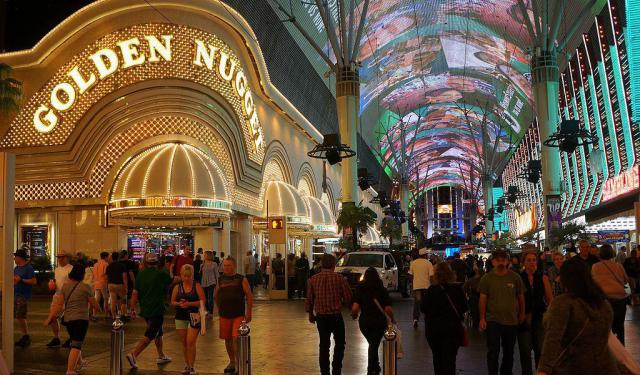
Downtown Walking Tour
Las Vegas began not as a gambling capital, but as a modest desert settlement shaped by transportation and opportunity. The turning point came in 1905 with the arrival of the San Pedro, Los Angeles and Salt Lake Railroad, which transformed a remote oasis into a service town for workers, traders, and travelers crossing the Mojave Desert. Officially incorporated in 1911, the city’s early life... view more
Tour Duration: 1 Hour(s)
Travel Distance: 2.1 Km or 1.3 Miles
Tour Duration: 1 Hour(s)
Travel Distance: 2.1 Km or 1.3 Miles

Gangster Attractions Walking Tour
The development of Las Vegas as a gambling and entertainment hub in the mid-20th century drew the attention of powerful criminal syndicates, who saw the potential for profit in the city's casinos and other enterprises. Indeed, Las Vegas with its glitz and glamour wouldn't be what it is now without the involvement of mobster “wiseguys”. There are still a few places in town that evoke... view more
Tour Duration: 4 Hour(s)
Travel Distance: 10.2 Km or 6.3 Miles
Tour Duration: 4 Hour(s)
Travel Distance: 10.2 Km or 6.3 Miles
Useful Travel Guides for Planning Your Trip

20 Souvenirs to Bring Home from Las Vegas
You may have kept on the run, had some fun in Las Vegas and, unless it cost you the very last dime, you might want to pick up something memorable to bring home, other than a handful of uncashed casino chips. In fact, you might as well be surprised to know there is something else in Vegas, apart from...
Top 18 Buffets in Las Vegas
In 1941, Thomas Hull, the man behind the Strip’s first hotel the El Rancho Vegas, realized that even though he might lose a few dollars by offering an “all you can eat” buffet,” the reward of funneling thousands of hungry gamblers through his casino to get to the buffet would more than pay...
13 Best Food Destinations in Las Vegas
Las Vegas has a long-standing history of great restaurants. The city has grown so fast in the last decades, seeing many celebrity chefs in the world of culinary setting up multiple craft food establishments in either mega-resort hotels or private entities off-the-Strip, that now it is practically...
The Most Popular Cities
/ view all