

The Rocks Walking Tour (Self Guided), Sydney
The Rocks is Sydney’s oldest European-settled neighbourhood and the place where the city’s colonial history kicked off—and it did so loudly, in boots and chains... In January 1788, the First Fleet came ashore at nearby Sydney Cove, setting up a British penal colony on land that had long belonged to the Aboriginal Gadigal people of the Eora Nation. Almost immediately, rough shelters, storehouses, and military buildings crept up the sandstone slopes beside the water. The rock itself shaped the place, naming it and locking it into the city’s future.
From the start, this was a working waterfront. Convicts and free settlers put up basic homes, workshops, and stores right next to the anchorage, turning The Rocks into Sydney’s engine room for labour, shipping, and trade. In the 1830s and '40s, the shoreline was pushed outward to create Circular Quay, tightening the bond between The Rocks and the harbour. Much of what still stands from this era was built from local sandstone, cut and hauled by convict hands—hard labour literally set in stone...
Life here was rarely polished. Throughout the late 18th and early 19th centuries, The Rocks had a tough maritime edge. Sailors, dockworkers, whalers, and labourers packed into cramped terraces and makeshift housing near the wharves. Pubs, boarding houses, and small workshops thrived, sharing the streets with churches and warehouses. The area kept Sydney’s port running, but it also gained a reputation for overcrowding, poverty, and petty crime.
Everything changed in 1900, when a bubonic plague outbreak triggered drastic action. Large sections of The Rocks were resumed by the government, residents were forced out, and slums were cleared. Streets were reshaped, and port facilities modernised, leaving behind a patchwork of Georgian cottages, Victorian terraces, and early 20th-century warehouses.
By the mid-1900s, demolition loomed again—until locals and unions stepped in. The green bans of the 1970s stopped wholesale redevelopment and turned The Rocks into a rallying point for heritage protection across Australia. Places like Cadmans Cottage, the Argyle Stores, the ASN Co Building, Susannah Place Museum, and old pubs such as the Fortune of War and the Australian Hotel now tell stories of work, survival, and social life across two centuries.
Humming with narrow lanes, museums, markets, cafés, and harbour views, today, The Rocks isn’t a recreated past or a sealed-off historic zone. Albeit still unmistakably old, it is very much alive, and still central to Sydney’s sense of itself—a place, where the city’s beginnings can still be read directly in the streets...
From the start, this was a working waterfront. Convicts and free settlers put up basic homes, workshops, and stores right next to the anchorage, turning The Rocks into Sydney’s engine room for labour, shipping, and trade. In the 1830s and '40s, the shoreline was pushed outward to create Circular Quay, tightening the bond between The Rocks and the harbour. Much of what still stands from this era was built from local sandstone, cut and hauled by convict hands—hard labour literally set in stone...
Life here was rarely polished. Throughout the late 18th and early 19th centuries, The Rocks had a tough maritime edge. Sailors, dockworkers, whalers, and labourers packed into cramped terraces and makeshift housing near the wharves. Pubs, boarding houses, and small workshops thrived, sharing the streets with churches and warehouses. The area kept Sydney’s port running, but it also gained a reputation for overcrowding, poverty, and petty crime.
Everything changed in 1900, when a bubonic plague outbreak triggered drastic action. Large sections of The Rocks were resumed by the government, residents were forced out, and slums were cleared. Streets were reshaped, and port facilities modernised, leaving behind a patchwork of Georgian cottages, Victorian terraces, and early 20th-century warehouses.
By the mid-1900s, demolition loomed again—until locals and unions stepped in. The green bans of the 1970s stopped wholesale redevelopment and turned The Rocks into a rallying point for heritage protection across Australia. Places like Cadmans Cottage, the Argyle Stores, the ASN Co Building, Susannah Place Museum, and old pubs such as the Fortune of War and the Australian Hotel now tell stories of work, survival, and social life across two centuries.
Humming with narrow lanes, museums, markets, cafés, and harbour views, today, The Rocks isn’t a recreated past or a sealed-off historic zone. Albeit still unmistakably old, it is very much alive, and still central to Sydney’s sense of itself—a place, where the city’s beginnings can still be read directly in the streets...
How it works: Download the app "GPSmyCity: Walks in 1K+ Cities" from Apple App Store or Google Play Store to your mobile phone or tablet. The app turns your mobile device into a personal tour guide and its built-in GPS navigation functions guide you from one tour stop to next. The app works offline, so no data plan is needed when traveling abroad.
Download The GPSmyCity App


The Rocks Walking Tour Map
Guide Name: The Rocks Walking Tour
Guide Location: Australia » Sydney (See other walking tours in Sydney)
Guide Type: Self-guided Walking Tour (Sightseeing)
# of Attractions: 10
Tour Duration: 1 Hour(s)
Travel Distance: 1.2 Km or 0.7 Miles
Author: australia
Sight(s) Featured in This Guide:
Guide Location: Australia » Sydney (See other walking tours in Sydney)
Guide Type: Self-guided Walking Tour (Sightseeing)
# of Attractions: 10
Tour Duration: 1 Hour(s)
Travel Distance: 1.2 Km or 0.7 Miles
Author: australia
Sight(s) Featured in This Guide:
- Circular Quay
- Fortune of War Hotel
- Gannon House
- The Rocks Discovery Museum
- Cadmans Cottage
- ASN Co Building
- Playfair Street Terraces
- Argyle Stores
- Australian Hotel
- Susannah Place Museum

1) Circular Quay
Circular Quay is Sydney’s front door to the harbour, wedged neatly between the Opera House and The Rocks, and always in motion. Ferries glide in and out, trains rumble below, buses arrive curbside, and all of it happens right at the water’s edge. What began as the colony’s original shoreline has shifted roles over time, trading cargo and cranes for promenades, cafés, and constant foot traffic. From dawn commuters to sunset strollers, this is one of the city’s most familiar rendezvous points, with harbour views that never need improving.
Its distinctive curve didn’t come naturally. During the 19th century, land reclamation and wharf building reshaped Sydney Cove—the very spot where the First Fleet came ashore in 1788—into the semicircular quay we see today. The result is both practical and theatrical: a transport hub that doubles as a public stage. At the eastern end stands Customs House, completed in 1845 and now repurposed, but still anchoring the area with its colonial presence. Along the western edge, former warehouses sit comfortably beside modern buildings, while street performers, ferry queues, and café tables keep the promenade in steady movement.
Circular Quay also works as a connector. Walk east, and you’re quickly at the Royal Botanic Garden and the Opera House forecourt, where the harbour opens wide. Head west, and the scene shifts to The Rocks, with its narrow lanes, sandstone façades, and historic pubs. Out on the water, ferries fan across the harbour to Manly, Taronga Zoo, Watsons Bay, and beyond, turning the quay into a launch point for exploring Sydney by sea.
Part transport interchange, part public living room, Circular Quay is where Sydney gathers, passes through, and pauses—sometimes all at once—against a backdrop that defines the city worldwide.
Its distinctive curve didn’t come naturally. During the 19th century, land reclamation and wharf building reshaped Sydney Cove—the very spot where the First Fleet came ashore in 1788—into the semicircular quay we see today. The result is both practical and theatrical: a transport hub that doubles as a public stage. At the eastern end stands Customs House, completed in 1845 and now repurposed, but still anchoring the area with its colonial presence. Along the western edge, former warehouses sit comfortably beside modern buildings, while street performers, ferry queues, and café tables keep the promenade in steady movement.
Circular Quay also works as a connector. Walk east, and you’re quickly at the Royal Botanic Garden and the Opera House forecourt, where the harbour opens wide. Head west, and the scene shifts to The Rocks, with its narrow lanes, sandstone façades, and historic pubs. Out on the water, ferries fan across the harbour to Manly, Taronga Zoo, Watsons Bay, and beyond, turning the quay into a launch point for exploring Sydney by sea.
Part transport interchange, part public living room, Circular Quay is where Sydney gathers, passes through, and pauses—sometimes all at once—against a backdrop that defines the city worldwide.

2) Fortune of War Hotel
The Fortune of War Hotel has been pouring drinks in The Rocks since 1828, which makes it one of Sydney’s oldest continuously licensed pubs—and one that has seen just about everything the harbour could throw at it. The building you see today dates from 1922, dressed in Federation Free Style with brick façades, arched windows, and decorative tiling. Long before that, this corner was already busy with sailors, soldiers, and dockworkers looking for food, drink, and a bit of relief after time at sea. The name says it all: this was a place shaped by chance, conflict, and hard-earned pay.
Inside, the mood alters comfortably into early 20th-century pub territory. Timber panelling, brass details, and walls lined with old photographs give the rooms a lived-in feel, as if generations of conversations never quite left. The main bar remains the heart of the place, where locals mix easily with visitors pausing mid-exploration. It still works as a neighbourhood pub first and a heritage site second, which is exactly why it feels authentic rather than staged.
The Fortune of War also carries strong ties to Australia’s military past. During both World Wars, it served as a familiar meeting point for servicemen, a role remembered through honour boards and memorabilia displayed inside. Today, live music, straightforward pub meals, and its long-standing presence on George Street keep it firmly part of daily life in The Rocks. It’s less a museum piece and more a reminder that history here wasn’t quiet or polished—it was loud, social, and usually accompanied by a drink...
Inside, the mood alters comfortably into early 20th-century pub territory. Timber panelling, brass details, and walls lined with old photographs give the rooms a lived-in feel, as if generations of conversations never quite left. The main bar remains the heart of the place, where locals mix easily with visitors pausing mid-exploration. It still works as a neighbourhood pub first and a heritage site second, which is exactly why it feels authentic rather than staged.
The Fortune of War also carries strong ties to Australia’s military past. During both World Wars, it served as a familiar meeting point for servicemen, a role remembered through honour boards and memorabilia displayed inside. Today, live music, straightforward pub meals, and its long-standing presence on George Street keep it firmly part of daily life in The Rocks. It’s less a museum piece and more a reminder that history here wasn’t quiet or polished—it was loud, social, and usually accompanied by a drink...

3) Gannon House
Gannon House is one of those buildings in The Rocks that quietly does double duty: a solid piece of colonial Sydney on the outside, a contemporary art gallery on the inside. Constructed in the 1840s by Michael Gannon—a local builder, publican, and practical operator—it was designed to work hard from day one, combining living quarters with commercial use just steps from the harbour. Its robust Georgian look says as much: thick sandstone walls, small-paned windows, and no decorative fuss. This was architecture for a waterfront economy of warehouses, taverns, and constant movement.
Roll the clock forward, and the bones remain, but the purpose has changed. Gannon House has been carefully restored and repurposed as a respected Australian art gallery. Inside, the original architectural details such as exposed beams, sandstone walls, and narrow staircases set the stage for Indigenous and contemporary works—paintings, sculpture, and glass—that feel especially vivid against the 19th-century backdrop. The contrast works quietly but effectively, turning history into part of the exhibition.
Sitting beside the Argyle Cut and close to the Overseas Passenger Terminal, Gannon House fits neatly into The Rocks’ dense cluster of preserved buildings. A small courtyard and café offer a natural pause point before heading back into the laneways, markets, and galleries nearby. It’s a reminder that Sydney’s early architecture isn’t frozen in time—it’s still very much in use.
Roll the clock forward, and the bones remain, but the purpose has changed. Gannon House has been carefully restored and repurposed as a respected Australian art gallery. Inside, the original architectural details such as exposed beams, sandstone walls, and narrow staircases set the stage for Indigenous and contemporary works—paintings, sculpture, and glass—that feel especially vivid against the 19th-century backdrop. The contrast works quietly but effectively, turning history into part of the exhibition.
Sitting beside the Argyle Cut and close to the Overseas Passenger Terminal, Gannon House fits neatly into The Rocks’ dense cluster of preserved buildings. A small courtyard and café offer a natural pause point before heading back into the laneways, markets, and galleries nearby. It’s a reminder that Sydney’s early architecture isn’t frozen in time—it’s still very much in use.

4) The Rocks Discovery Museum
Set inside a solid sandstone warehouse from the 1850s, The Rocks Discovery Museum feels less like a museum you enter and more like one you’ve stepped into mid-conversation with history. This former port-side storehouse once played a role in Sydney’s mercantile hustle—back when ships, cargo, and ambition crowded the shoreline. Reopened in 2005 as a museum, it now uses its own bones—thick walls, timber beams, and timeworn stone—to frame the story of The Rocks, from its Aboriginal roots to its days as a convict quarter and a thriving colonial port.
The exhibitions unfold across four clear chapters, namely: Before Contact; Colony and Convicts; Port and Progress; and Transformation. Together, they track how this small stretch of land kept reinventing itself. Touchscreens, maps, and hands-on displays sit alongside artefacts recovered from archaeological digs—ceramics, tools, and everyday objects that once belonged to the people who lived and worked here. These fragments turn broad history into something personal, grounding big events in daily routines along Sydney Cove.
Admission is free, which makes lingering easy, and the interactive approach works just as well for curious adults as it does for younger visitors. The building itself pulls its weight as an exhibit, quietly demonstrating how history isn’t only told through labels and screens, but built into the structure around you. Managed by Placemaking New South Wales, the museum keeps things clear, approachable, and well-paced—an ideal primer before heading back out into the lanes of The Rocks, where the rest of the story continues underfoot...
The exhibitions unfold across four clear chapters, namely: Before Contact; Colony and Convicts; Port and Progress; and Transformation. Together, they track how this small stretch of land kept reinventing itself. Touchscreens, maps, and hands-on displays sit alongside artefacts recovered from archaeological digs—ceramics, tools, and everyday objects that once belonged to the people who lived and worked here. These fragments turn broad history into something personal, grounding big events in daily routines along Sydney Cove.
Admission is free, which makes lingering easy, and the interactive approach works just as well for curious adults as it does for younger visitors. The building itself pulls its weight as an exhibit, quietly demonstrating how history isn’t only told through labels and screens, but built into the structure around you. Managed by Placemaking New South Wales, the museum keeps things clear, approachable, and well-paced—an ideal primer before heading back out into the lanes of The Rocks, where the rest of the story continues underfoot...

5) Cadmans Cottage
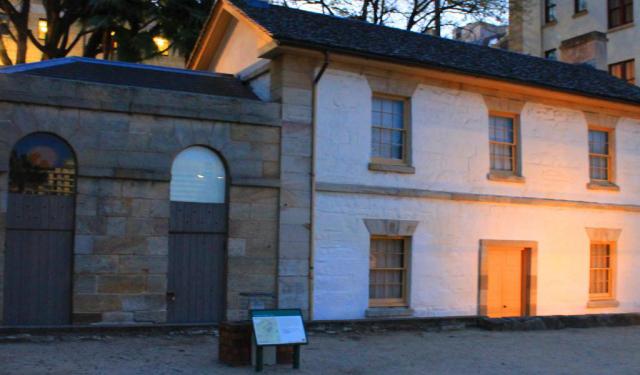
Cadmans Cottage is one of those buildings that makes modern Sydney pause for a moment. Built in 1816 from locally quarried sandstone, it once sat right on the edge of Sydney Cove, before land reclamation pushed the shoreline away and left it slightly inland. Its neat Georgian symmetry wasn’t about style purely for style’s sake—it was designed to work. This was the combined home and office of the Coxswain of Government Boats, the person in charge of the colony’s small but essential harbour fleet.
As Sydney expanded, the cottage kept changing jobs. In the 1840s, it became the headquarters of the Water Police, reflecting growing concerns about order along the busy waterfront. Later in the 19th century, it was absorbed into the Sydney Sailors’ Home, offering lodging for seafarers who arrived tired, broke, or simply between voyages. Each phase left marks behind, from altered rooms to added details, creating a layered record of how the harbour community functioned day to day. Restoration work has carefully peeled back those layers, making the building’s many lives visible rather than polishing them away.
Today, Cadmans Cottage finds itself amid cobbled lanes, historic pubs, and former warehouses, its rough sandstone walls set against glass towers and traffic noise. Inside, interpretive displays unpack the stories of officials, sailors, and workers who passed through its doors. It’s a small building with a long memory—one that quietly reminds visitors that Sydney began as a working harbour, long before it became a postcard skyline...
As Sydney expanded, the cottage kept changing jobs. In the 1840s, it became the headquarters of the Water Police, reflecting growing concerns about order along the busy waterfront. Later in the 19th century, it was absorbed into the Sydney Sailors’ Home, offering lodging for seafarers who arrived tired, broke, or simply between voyages. Each phase left marks behind, from altered rooms to added details, creating a layered record of how the harbour community functioned day to day. Restoration work has carefully peeled back those layers, making the building’s many lives visible rather than polishing them away.
Today, Cadmans Cottage finds itself amid cobbled lanes, historic pubs, and former warehouses, its rough sandstone walls set against glass towers and traffic noise. Inside, interpretive displays unpack the stories of officials, sailors, and workers who passed through its doors. It’s a small building with a long memory—one that quietly reminds visitors that Sydney began as a working harbour, long before it became a postcard skyline...
6) ASN Co Building
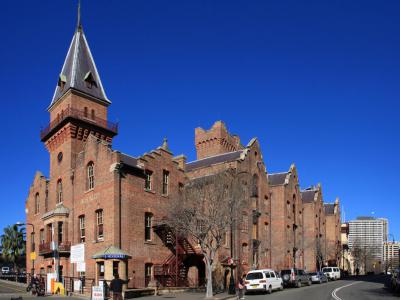
The ASN Co Building is vivid evidence that even a warehouse once knew how to dress well. Completed in 1885 for the Australasian Steam Navigation Company, it was designed by William Wilkinson Wardell alongside Walter Liberty Vernon—two architects who clearly decided that cargo deserved flair. Originally serving as offices and storage for a major shipping firm, the building anchored The Rocks firmly in Sydney’s maritime age.
Architecturally, this is no plain brick box. The style is Pre-Federation Anglo-Dutch, which means decorative parapets, colourful brickwork, towers, and sharply stepped gables—features more often associated with civic buildings than with crates and paperwork. Look closely, and you’ll find another curiosity: remnants of one of Australia’s earliest fire sprinkler systems, complete with cast-iron pipes and sprinkler heads, a reminder that even in the 19th century, someone was thinking ahead...
The shipping company didn’t stay long. After a merger, the ASN Co moved on, but the building didn’t fade into obscurity. It slipped neatly into public service, passing through various government hands as an ordnance store, offices, and other official uses. By the late 20th century, however, its Victorian character had been dulled by time and alterations.
Luckily, that changed in the early 1990s, when a careful restoration peeled back later layers and revived much of its original detail. Brickwork, decorative elements, and proportions were brought back into focus, restoring the building’s confident late-19th-century presence on the waterfront.
Today, the story takes a brighter turn. The lower levels now house the Ken Done Gallery and store. Inside, bold colour replaces maritime paperwork, with artworks inspired by Sydney Harbour, sunlit beaches, the Great Barrier Reef, and familiar Australian scenes. It’s a fitting second life: a former shipping warehouse now exporting colour, optimism, and a very modern vision of Australia—without a single crate in sight...
Architecturally, this is no plain brick box. The style is Pre-Federation Anglo-Dutch, which means decorative parapets, colourful brickwork, towers, and sharply stepped gables—features more often associated with civic buildings than with crates and paperwork. Look closely, and you’ll find another curiosity: remnants of one of Australia’s earliest fire sprinkler systems, complete with cast-iron pipes and sprinkler heads, a reminder that even in the 19th century, someone was thinking ahead...
The shipping company didn’t stay long. After a merger, the ASN Co moved on, but the building didn’t fade into obscurity. It slipped neatly into public service, passing through various government hands as an ordnance store, offices, and other official uses. By the late 20th century, however, its Victorian character had been dulled by time and alterations.
Luckily, that changed in the early 1990s, when a careful restoration peeled back later layers and revived much of its original detail. Brickwork, decorative elements, and proportions were brought back into focus, restoring the building’s confident late-19th-century presence on the waterfront.
Today, the story takes a brighter turn. The lower levels now house the Ken Done Gallery and store. Inside, bold colour replaces maritime paperwork, with artworks inspired by Sydney Harbour, sunlit beaches, the Great Barrier Reef, and familiar Australian scenes. It’s a fitting second life: a former shipping warehouse now exporting colour, optimism, and a very modern vision of Australia—without a single crate in sight...
7) Playfair Street Terraces
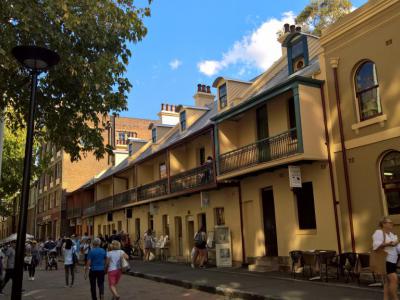
Playfair Street Terraces line one of The Rocks’ most atmospheric lanes, a row of late-19th-century sandstone and brick buildings that once housed working families tied to Sydney’s busy wharves. Built close to the harbour, these narrow terraces were designed for practicality rather than display: compact façades, shuttered windows, and steep iron roofs, all anchored by locally quarried sandstone shaped by hand. It is architecture born of hard work and proximity to the port, where home and labour were never far apart.
Time has softened the edges without erasing the past. Today, the terraces have been carefully restored and adapted, their former living rooms now hosting cafés, small shops, and galleries that spill straight onto the cobbled laneway. At a closer look, you can see the original details still holding their ground—cast-iron balconies, timber joinery, recessed doorways—quiet reminders of Victorian craftsmanship woven into everyday modern use. Their human scale feels almost conspiratorial, especially when set against the glass and steel rising elsewhere in the city.
Playfair Street itself once pulsed with dockside life, and that energy hasn’t entirely disappeared. Now part of The Rocks Conservation Area, the terraces sit among market stalls, stone courtyards, and wandering foot traffic, creating a streetscape that feels lived-in rather than staged. Add the sound of buskers, the smell of coffee drifting from nearby cafés, and the rough texture of 19th-century stone underfoot, and you’re standing in a pocket of Sydney where the old harbour town still knows how to speak—without raising its voice...
Time has softened the edges without erasing the past. Today, the terraces have been carefully restored and adapted, their former living rooms now hosting cafés, small shops, and galleries that spill straight onto the cobbled laneway. At a closer look, you can see the original details still holding their ground—cast-iron balconies, timber joinery, recessed doorways—quiet reminders of Victorian craftsmanship woven into everyday modern use. Their human scale feels almost conspiratorial, especially when set against the glass and steel rising elsewhere in the city.
Playfair Street itself once pulsed with dockside life, and that energy hasn’t entirely disappeared. Now part of The Rocks Conservation Area, the terraces sit among market stalls, stone courtyards, and wandering foot traffic, creating a streetscape that feels lived-in rather than staged. Add the sound of buskers, the smell of coffee drifting from nearby cafés, and the rough texture of 19th-century stone underfoot, and you’re standing in a pocket of Sydney where the old harbour town still knows how to speak—without raising its voice...
8) Argyle Stores
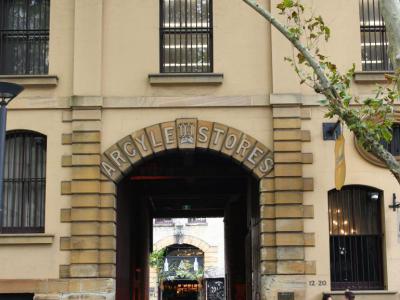
The Argyle Stores are one of the heavyweight survivors of The Rocks’ commercial past, built in stages from the 1820s through to the 1870s. Cut from local sandstone and brick, these interconnected warehouses once operated as bonded storage for merchants dealing in wine, spirits, textiles, and other valuable imports. Long before cafés and galleries moved in, this was a place of ledgers, barrels, and hard bargaining, closely tied to Sydney’s rise as a working port city.
Architecturally, the complex reads like a timeline in stone. The earliest sections keep things firmly Georgian, with thick sandstone walls, arched doorways, and heavy timber framing designed for strength rather than decoration. As you move through the later additions, Victorian influences take over, bringing brickwork and iron details that reflect changing building methods and growing commercial ambition. Together, these layers quietly track how Sydney’s waterfront economy expanded and adapted across the 19th century.
By the 20th century, shipping patterns shifted, and the warehouses outlived their original purpose. Instead of disappearing, the Argyle Stores were repurposed. Today, they accommodate galleries, restaurants, and event spaces, but the interiors still give away their former life. Stone floors, exposed beams, and broad, open rooms make it easy to imagine crates stacked high and goods moving in and out under the watchful eye of customs officers.
For anyone exploring The Rocks, the Argyle Stores offer more than a pleasant stop. Walking through the courtyards and passageways gives a clear sense of how this district once functioned as a centre of harbour-side trade. It’s a place where Sydney’s early business instincts remain visible, quietly embedded in the fabric of the city.
Architecturally, the complex reads like a timeline in stone. The earliest sections keep things firmly Georgian, with thick sandstone walls, arched doorways, and heavy timber framing designed for strength rather than decoration. As you move through the later additions, Victorian influences take over, bringing brickwork and iron details that reflect changing building methods and growing commercial ambition. Together, these layers quietly track how Sydney’s waterfront economy expanded and adapted across the 19th century.
By the 20th century, shipping patterns shifted, and the warehouses outlived their original purpose. Instead of disappearing, the Argyle Stores were repurposed. Today, they accommodate galleries, restaurants, and event spaces, but the interiors still give away their former life. Stone floors, exposed beams, and broad, open rooms make it easy to imagine crates stacked high and goods moving in and out under the watchful eye of customs officers.
For anyone exploring The Rocks, the Argyle Stores offer more than a pleasant stop. Walking through the courtyards and passageways gives a clear sense of how this district once functioned as a centre of harbour-side trade. It’s a place where Sydney’s early business instincts remain visible, quietly embedded in the fabric of the city.

9) Australian Hotel
The Australian Hotel has been part of The Rocks’ daily rhythm since 1824, making it one of Sydney’s oldest pubs still pouring drinks. The building you see today dates from 1914, rebuilt in the Federation Free Style and shaped to fit the bend where Gloucester and Cumberland Streets meet. Its wedge-like form gives it a street-smart profile, while brick walls, sandstone details, arched windows, decorative tiling, and timber accents mark it clearly as a product of early 20th-century pub design.
Once inside, the atmosphere turns comfortably old-fashioned. Timber bars stretch along the room, pressed-metal ceilings catch the light, and period fittings give the space a solid, no-nonsense feel. Photographs and memorabilia line the walls, telling stories of dockworkers, sailors, and the everyday life of The Rocks when the harbour set the tempo. It’s lively rather than hushed, a place built to be used, not admired from a distance.
The Australian Hotel has also kept pace with modern tastes. It’s known for championing Australian craft beer, with a rotating line-up of local brews on tap. The kitchen leans into classic pub fare, with a distinctly Australian twist—think pizzas topped with kangaroo or crocodile alongside more familiar options. Tastings, live music, and casual gatherings keep the place firmly rooted in Sydney’s contemporary social scene.
Taken as a whole, the Australian Hotel offers more than a meal or a drink. Its architecture, interiors, and atmosphere capture the layered character of The Rocks itself, where working-harbour history and modern city life overlap. Spending a little time here is an easy way to sense how Sydney’s past continues to show up in the present—one pint at a time...
Once inside, the atmosphere turns comfortably old-fashioned. Timber bars stretch along the room, pressed-metal ceilings catch the light, and period fittings give the space a solid, no-nonsense feel. Photographs and memorabilia line the walls, telling stories of dockworkers, sailors, and the everyday life of The Rocks when the harbour set the tempo. It’s lively rather than hushed, a place built to be used, not admired from a distance.
The Australian Hotel has also kept pace with modern tastes. It’s known for championing Australian craft beer, with a rotating line-up of local brews on tap. The kitchen leans into classic pub fare, with a distinctly Australian twist—think pizzas topped with kangaroo or crocodile alongside more familiar options. Tastings, live music, and casual gatherings keep the place firmly rooted in Sydney’s contemporary social scene.
Taken as a whole, the Australian Hotel offers more than a meal or a drink. Its architecture, interiors, and atmosphere capture the layered character of The Rocks itself, where working-harbour history and modern city life overlap. Spending a little time here is an easy way to sense how Sydney’s past continues to show up in the present—one pint at a time...
10) Susannah Place Museum
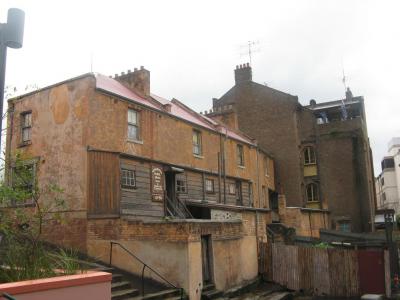
Susannah Place Museum occupies four terrace houses standing shoulder to shoulder in The Rocks, quietly doing what they’ve done since 1844: housing everyday life. Built by Irish immigrants Edward and Mary Riley, these modest homes went up in local sandstone and brick, hand-pressed and hand-laid. The Rileys lived in one house and rented out the other three, a practical strategy that helped working families get by in a growing colonial town. What survives today is a rare snapshot of 19th-century domestic life, preserved not for grand design, but for its ordinariness.
Inside, each terrace is set to a different era, tracing how life here changed from the 1840s to the 1970s. Rooms are compact, staircases are narrow, and courtyards are barely more than pauses between walls. Furniture, tools, and household objects—some original, some carefully recreated—show how generations adapted to tight spaces, shifting jobs, and changing expectations. It’s a slow walk through time, measured in worn floors, patched walls, and practical solutions.
One corner holds a restored shop that once supplied the neighbourhood with daily essentials, back when shopping meant conversation over a counter, not aisles and scanners... Along the way, stories of former residents bring names and routines back into these rooms, grounding big historical shifts—industrialisation, urban renewal, redevelopment—in lived experience.
Run by Sydney Living Museums, Susannah Place doesn’t aim to impress. It aims to remember. Within these four terraces, Sydney’s immigrant and working-class history survives at human scale, offering a clear, unsentimental look at how the city was built from the inside out.
Inside, each terrace is set to a different era, tracing how life here changed from the 1840s to the 1970s. Rooms are compact, staircases are narrow, and courtyards are barely more than pauses between walls. Furniture, tools, and household objects—some original, some carefully recreated—show how generations adapted to tight spaces, shifting jobs, and changing expectations. It’s a slow walk through time, measured in worn floors, patched walls, and practical solutions.
One corner holds a restored shop that once supplied the neighbourhood with daily essentials, back when shopping meant conversation over a counter, not aisles and scanners... Along the way, stories of former residents bring names and routines back into these rooms, grounding big historical shifts—industrialisation, urban renewal, redevelopment—in lived experience.
Run by Sydney Living Museums, Susannah Place doesn’t aim to impress. It aims to remember. Within these four terraces, Sydney’s immigrant and working-class history survives at human scale, offering a clear, unsentimental look at how the city was built from the inside out.
Walking Tours in Sydney, Australia

Create Your Own Walk in Sydney
Creating your own self-guided walk in Sydney is easy and fun. Choose the city attractions that you want to see and a walk route map will be created just for you. You can even set your hotel as the start point of the walk.

Food Tour in Sydney
Sydney eats the way it lives: facing the water, open to the world, and shaped by whoever happens to arrive next. As a port city and long-time migrant gateway, its food culture grew from exchange rather than tradition and today is defined by openness and variety. Here, you'll find a relaxed but confident mix of everyday multicultural eating and destination dining.
Indeed, Sydney's... view more
Tour Duration: 1 Hour(s)
Travel Distance: 2.2 Km or 1.4 Miles
Indeed, Sydney's... view more
Tour Duration: 1 Hour(s)
Travel Distance: 2.2 Km or 1.4 Miles

Sydney Introduction Walking Tour
Sydney has a way of introducing itself before you even say hello. With its busy harbour, layered history, and cultural mash-up shaped over millennia, this city doesn’t wait for an invitation. Long before its skyline took shape, the region was home to the Aboriginal peoples of the Eora Nation, including the one called Gadigal, whose deep connection to land and water shaped everything—from... view more
Tour Duration: 2 Hour(s)
Travel Distance: 3.5 Km or 2.2 Miles
Tour Duration: 2 Hour(s)
Travel Distance: 3.5 Km or 2.2 Miles

Newtown Street Murals Walking Tour
Whenever you think of street art in Sydney, one suburb immediately springs to mind and that is Newtown. Largely regarded as Sydney’s coolest neighborhood, this is a ground zero of the city's mural art scene.
Ever since the early 1990s, with the appearance of the famous “I Have a Dream” Mural on King Street, a powerful depiction of Martin Luther King Junior's iconic speech, this... view more
Tour Duration: 1 Hour(s)
Travel Distance: 1.3 Km or 0.8 Miles
Ever since the early 1990s, with the appearance of the famous “I Have a Dream” Mural on King Street, a powerful depiction of Martin Luther King Junior's iconic speech, this... view more
Tour Duration: 1 Hour(s)
Travel Distance: 1.3 Km or 0.8 Miles
Historic Buildings Walking Tour
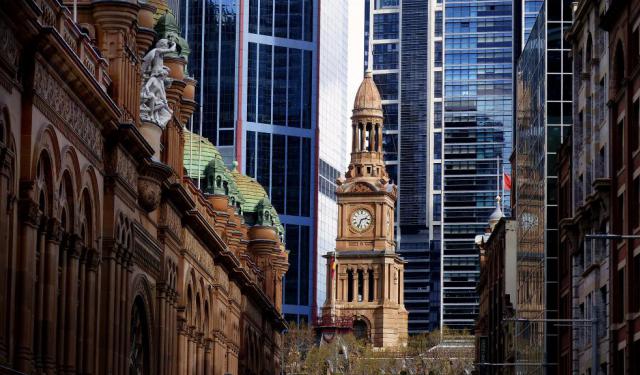
One of the Australia’s largest cities, Sydney is also the country's oldest metropolis. It has no shortage of impressive historical buildings, some dating back as far as the early 19th century. Many of the local landmarks, such as Sydney Town Hall, Queen Victoria Building (QVB), Hyde Park Barracks and others, are wonders in their own right and fit to delight any history buff.
One can... view more
Tour Duration: 2 Hour(s)
Travel Distance: 3.1 Km or 1.9 Miles
One can... view more
Tour Duration: 2 Hour(s)
Travel Distance: 3.1 Km or 1.9 Miles
Sydney's Historical Churches
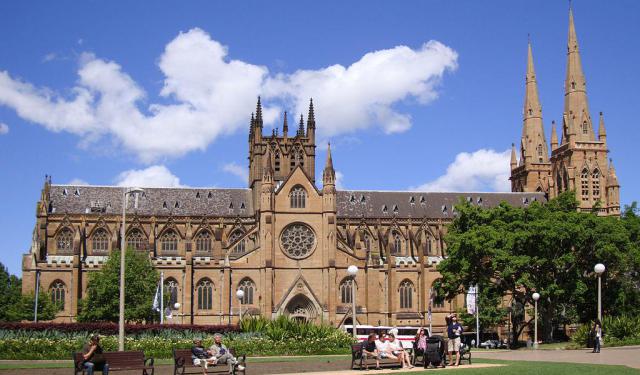
Over the years, Sydney's historical churches have aroused a sense of admiration in many beholders. Some of these buildings have even become iconic symbols of Sydney, well worth going a good way to see as vivid examples of both historical and architectural value.
The impressive Early English-style of architecture seen in Saint Mary's Cathedral is said to have inspired the American... view more
Tour Duration: 1 Hour(s)
Travel Distance: 3.2 Km or 2 Miles
The impressive Early English-style of architecture seen in Saint Mary's Cathedral is said to have inspired the American... view more
Tour Duration: 1 Hour(s)
Travel Distance: 3.2 Km or 2 Miles
Useful Travel Guides for Planning Your Trip

Top 15 Aussie Souvenirs to Bring Home from Sydney
"You haven't been anywhere if you haven't been to Australia," they say, and you'd definitely want something tangible in hand to remind you of the g'days spent Down Under. In Sydney, you will find tonnes of distinctly Oz products that would serve this purpose...
The Most Popular Cities
/ view all